Wall Retrofitting with Standard Products of the Modern Wall Mesh Department
Wall Retrofitting with Standard Products of the Modern Wall Mesh Department
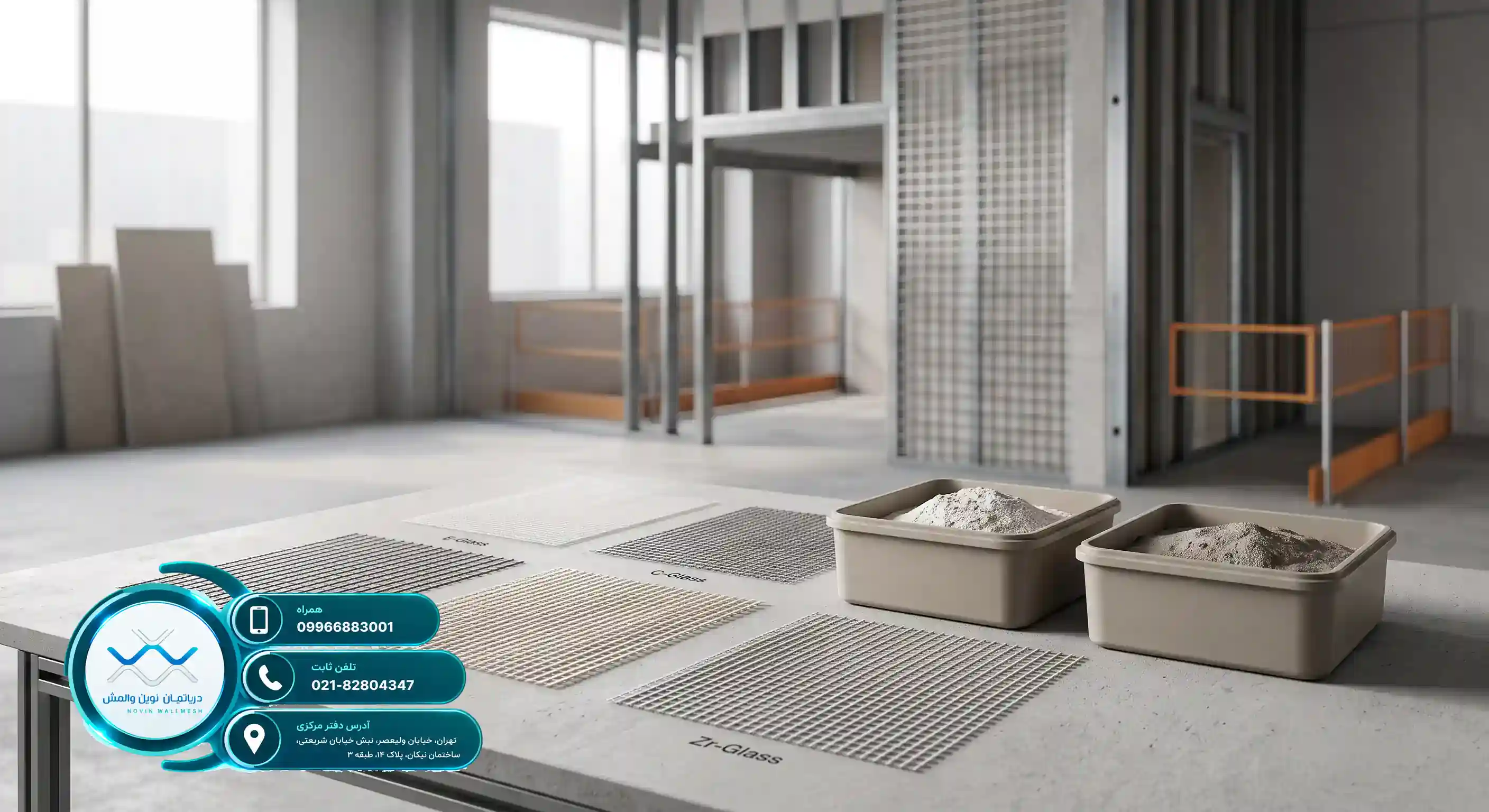
Challenges of Non-Structural Walls in the Construction Industry
In recent years, with the exponential growth of construction and the increase in building floors, earthquake safety has become one of the primary concerns for engineers and owners. Non-structural walls, infills, and partitions make up a large portion of a structure's volume, which can suffer severe damage during an earthquake. Traditional systems such as angle iron bracing and metal wall posts, while somewhat efficient, increase the dead load of the structure and are vulnerable to corrosion. For this reason, the introduction of modern technologies such as standard products from the Modern Wall Mesh Department has managed to create a major revolution in this industry.
According to the new guidelines of Standard 2800, seismic restraint of non-structural walls is mandatory. The use of traditional materials due to high weight, high installation costs, and insufficient flexibility against lateral earthquake loads no longer meets modern engineering needs. Consequently, the tendency towards composite reinforcement systems has increased. Along these lines, structural engineering experts believe that utilizing modern technologies is the key to building sustainability against natural disasters (Non-Structural Wall Retrofitting with Wall Mesh).
Advantages of Modern Composite Systems
- Significant reduction in the structural dead load and optimization of foundation design
- High implementation speed and reduced labor costs
- Very high resistance to corrosion and various environmental conditions
- Integration of wall performance with the main building skeleton
To become more familiar with costs, we suggest carefully reading the page Wall Mesh Price and Non-Structural Wall Retrofitting Guide so you can make an informed decision regarding your project's budgeting.
What is Wall Mesh and How Does It Work?
The Wall Mesh system is an advanced engineering solution for restraining non-structural walls, in which fiberglass mesh networks combined with mineral plasters are used instead of heavy metal elements. This net-like mesh is installed on the wall surface and, by creating a continuous coating, distributes earthquake forces uniformly across the wall surface. The Modern Wall Mesh Department plays a key role in upgrading the execution quality of these systems by providing engineered products.
The mechanical performance of this system is based on creating a non-metallic tensile element that significantly increases the ductility of the wall. When an earthquake occurs, walls lacking proper restraint bend out of plane and collapse. The presence of fiberglass meshes prevents this collapse and ensures the physical safety of the occupants. Field studies in the concrete industry show that this method has more stable performance compared to traditional methods (Non-Structural Wall Retrofitting with Wall Mesh).
Main Components of the Wall Mesh System
To properly implement this system, a set of compatible and high-quality materials is required, which include:
- Glass fiber mesh or fiberglass mesh
- Special plaster (gypsum or cement base)
- Suitable mechanical connections for restraining edges
- Adhesives and primers to improve bonding
Along these lines, reading the specialized article Analysis of E-Glass Wall Mesh Prices from the Modern Wall Mesh Department in Construction Projects provides complete information regarding the selection of the appropriate type of these materials.
Wall Retrofitting with Standard Products from the Novin Wall Mesh Department

A Modern Evolution in the Construction Industry with a Civil Defense Approach
Non-structural and infill walls are among the most vulnerable components of concrete and steel structures during an earthquake. The bitter experiences of past earthquakes have shown that the collapse of these walls can cause irreparable financial and human losses. Therefore, supervising engineers and structural designers have always sought efficient and economical methods for the seismic bracing of these elements. Amidst this, the use of modern reinforcement systems has gained a special position.
We at the Novin Wall Mesh Department, relying on up-to-date technical knowledge and years of experience in the construction industry, offer innovative, wall-mesh-based solutions for retrofitting and reinforcing non-structural walls. These systems are recognized as a modern replacement for traditional steel wall-posts, which, in addition to high execution speed, drastically reduce the weight of the structure and exhibit integrated performance against lateral earthquake forces.
To become more familiar with the technical and economic details of these systems, reading the comprehensive article Wall Mesh Price and Non-Structural Wall Retrofitting Guide is recommended for dear engineers and implementers so they can select the appropriate materials for their project with an open mind.
Our main mission in this collection is to increase the safety, durability, and quality of Iranian structures through engineered products that comply with the highest execution standards. The quality of the materials used plays a direct role in the seismic behavior of the wall, and using substandard products can jeopardize the entire structure.
General Advantages of Modern Reinforcement Systems
- Reduction of the structure's dead load compared to traditional heavy channels
- High execution speed and reduced labor costs
- High flexibility in various dimensions and execution details
- Excellent compatibility with various plasters and masonry materials
The Key Role of E-Glass Fiberglass Mesh in Structural Engineering
One of the main pillars of the wall-mesh system is the glass fiber network, or fiberglass mesh. Among the various fibers, the E-Glass Fiberglass Mesh from the Novin Wall Mesh Department has the most application in typical residential and commercial projects due to its high tensile strength, good chemical durability, and affordable price. This type of fiber is made of alumino-borosilicate glass, which brings exceptional electrical and mechanical properties.
A detailed examination of the technical specifications of this product in the specialized article Price Analysis of E-Glass Wall Mesh by the Novin Wall Mesh Department in Construction Projects shows to what extent this material has been able to optimize final construction costs. Also, for engineers conducting international projects or comparative studies, reading the Arabic article مراجعة سعر والمش E-Glass من دپارتمان نوین وال مش فی المشاریع الإنشائیة is considered a valuable resource.
In accordance with international earthquake engineering standards, including guidelines published in Non-Structural Wall Retrofitting with Wall Mesh, the use of high-quality glass meshes has been able to significantly improve the performance of infill walls. By distributing earthquake-induced stress across the wall surface, these meshes prevent the formation of diagonal cracks and the sudden collapse of materials.
The prominent features of E-Glass mesh include the following:
- Extraordinary tensile strength along the warp and weft
- Good coverage with various resins and primers
- Resistance to mild alkaline environments
- Very light weight and easy transportation on site