Retrofitting Non-Structural Walls Using the Modern Wall Mesh Method
Retrofitting Non-Structural Walls Using the Modern Wall Mesh Method
Introduction to the Importance of Non-Structural Walls
Although perimeter walls and interior partitions in buildings are not considered as lateral or gravity load-bearing elements in the initial design, they account for a major portion of the consumed materials and construction costs. During an earthquake, these components are severely affected by the lateral deformations of the main structure. Failure to properly restrain them can lead to premature damage, debris collapse, and casualties. For this reason, reinforcing and retrofitting non-structural walls has become one of the main requirements of modern seismic design codes.
The Role of Infill Walls in the Seismic Behavior of Structures
Based on earthquake engineering studies, infills affect the overall stiffness and behavior of the structure. The interaction between the concrete or steel frame and the brick or block wall can cause phenomena such as the short-column effect. To prevent these damages, implementing flexible and durable bracing systems is essential. Engineers are utilizing modern technologies to find solutions that preserve wall integrity without increasing the dead weight of the structure.
The Necessity of Transitioning from Traditional Methods to Modern Solutions
Traditional wall-restraining methods, such as heavy angle irons and field welding, in addition to being heavy, had execution weaknesses in connecting to concrete or steel structures. Stress concentration at connection points and the corrosion of steel materials reduced the useful life of these systems. Therefore, the need for a lighter, more cohesive, and highly durable engineering solution was felt, which drove the construction industry toward advanced technologies.
The department of wall mesh price and non-structural wall retrofitting guide provides comprehensive and specialized information for engineers and contractors to make the best decisions for their projects. You can also read more information in retrofitting non-structural walls with wall mesh.
What is Wall Mesh and How Does It Work?
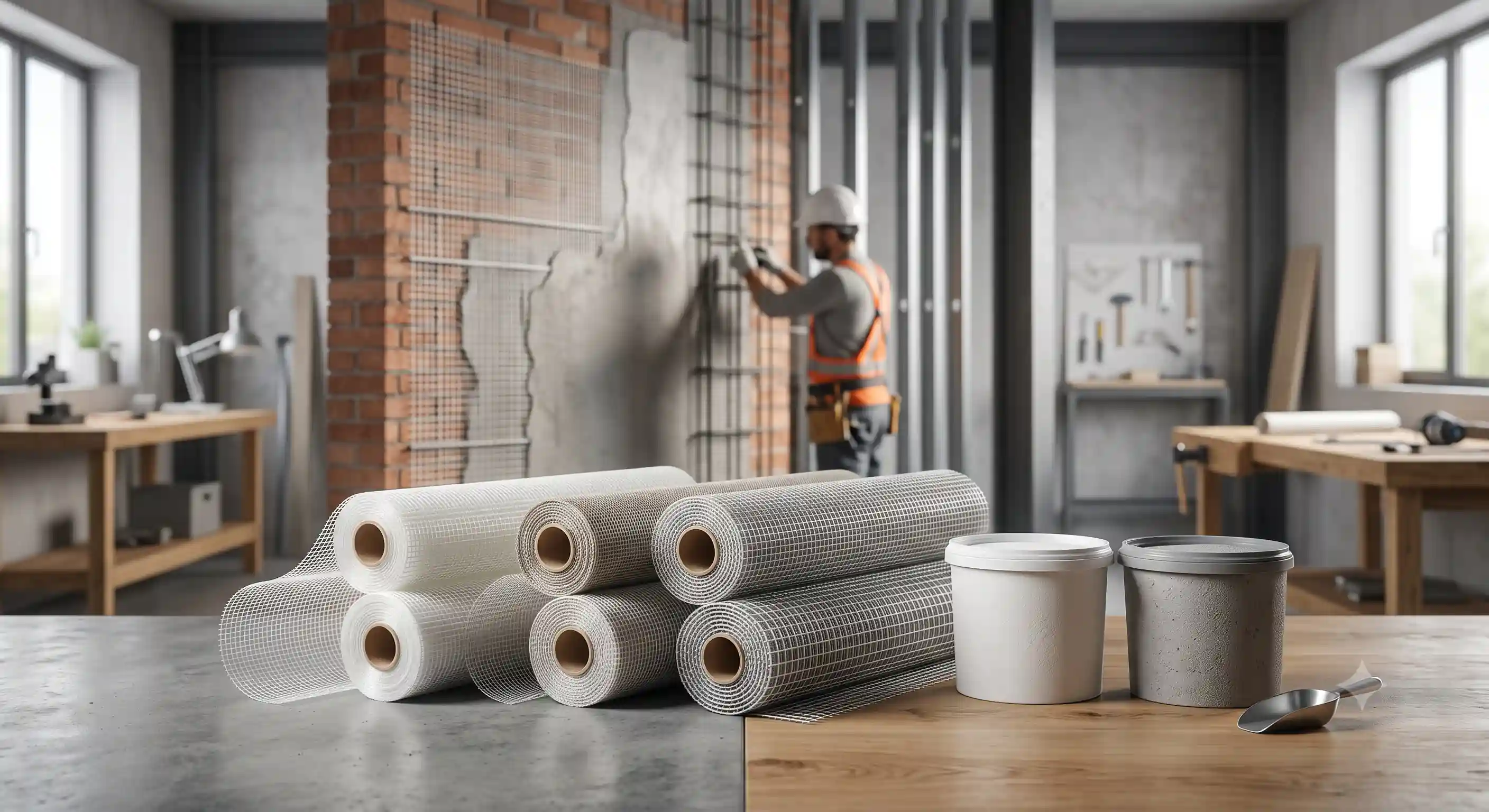
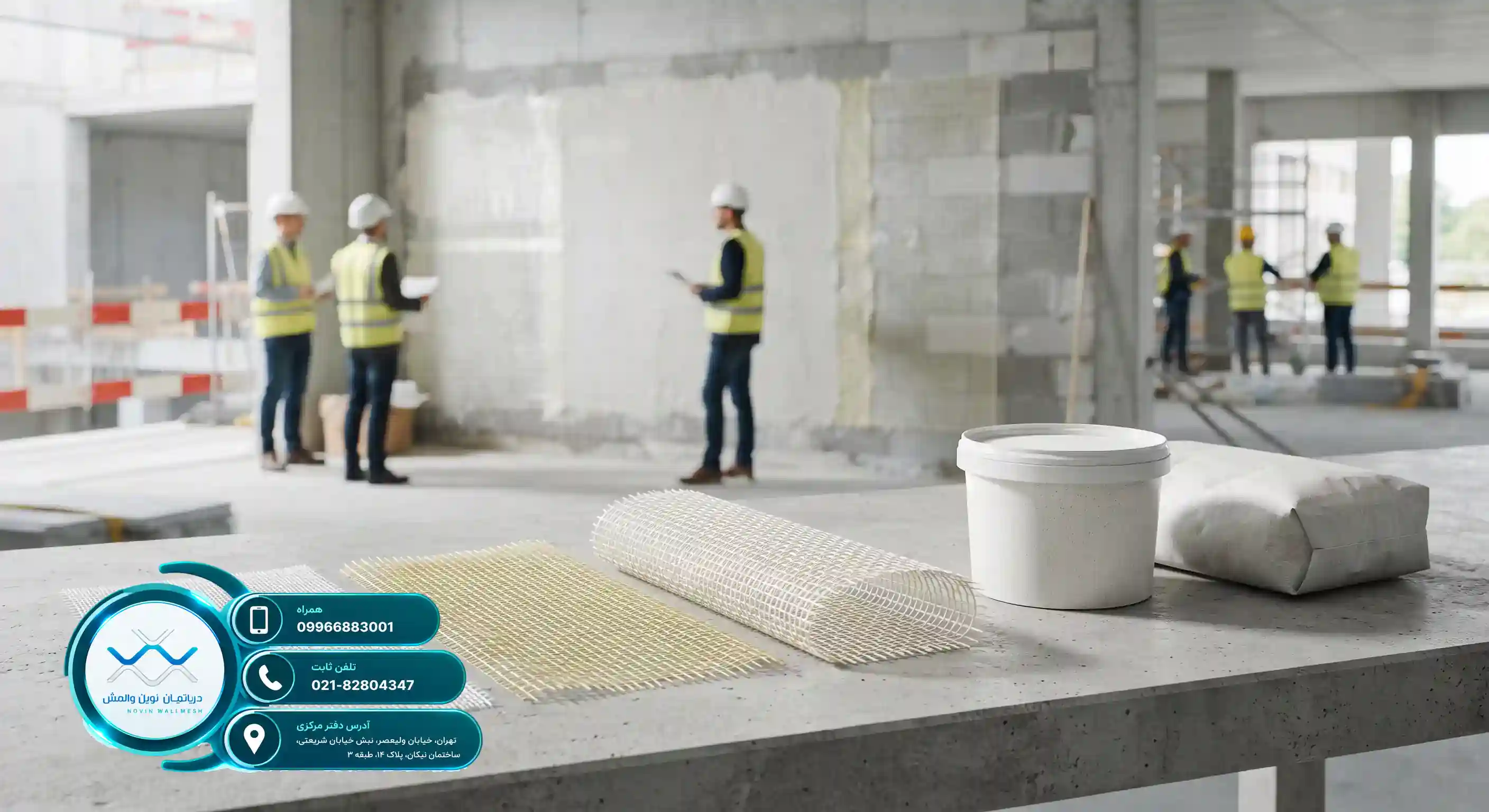
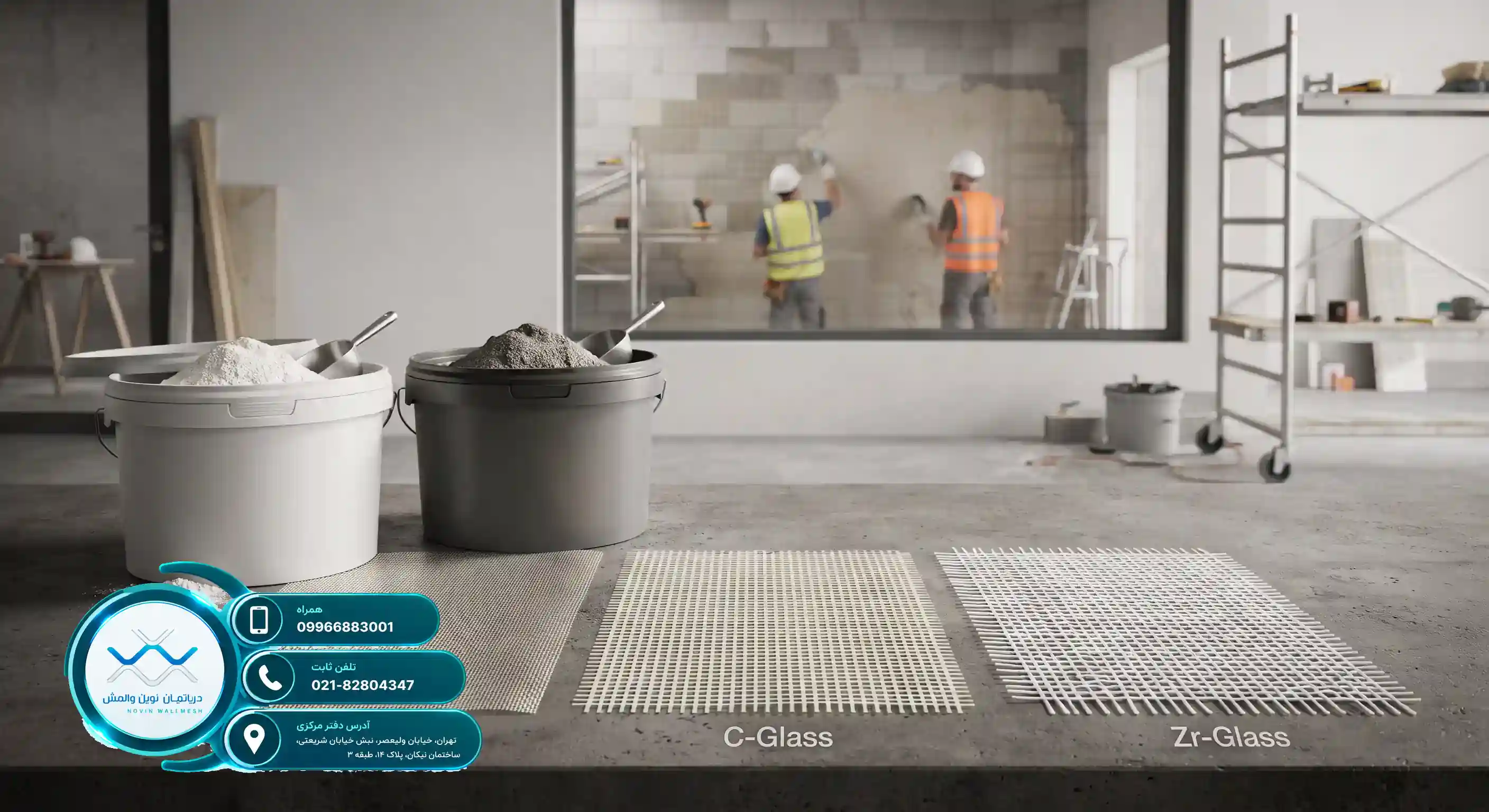
Simply put, wall mesh is a composite reinforcing grid consisting of fiberglass mesh strips combined with specialized plaster. This system serves as a suitable alternative to traditional metal wall posts. In this method, mesh strips are installed on the wall surface and covered with a layer of plaster to create an integrated system for distributing stresses caused by seismic forces.
Main Components of the Wall Mesh System
Every standard wall mesh system includes the following:
- Fiberglass mesh: The main structural core that withstands tension.
- Base plaster: The covering material that encases the mesh and ensures adhesion.
- Edge connections: Restraining profiles or angles at the top and bottom of the wall.
For a deeper review of the benefits of this technology, read the useful article Why Buying Wall Mesh is the Best Non-Structural Retrofitting Method?.
Technical Advantages Over Traditional Methods
Using the wall mesh system significantly reduces the building's dead load and increases execution speed. Reducing execution costs and eliminating heavy welding operations are other prominent advantages of this system that meet modern construction standards.
Retrofitting Non-Structural Walls and Standard 2800 Regulations
Retrofitting Non-Structural Walls and Standard 2800 Regulations
Introduction to Seismic Vulnerability and Non-Structural Walls
In recent decades, with the advancement of earthquake engineering and statistical analysis of damages caused by destructive earthquakes, it has become clear that a major portion of casualties and financial losses is not due to the complete collapse of the structural skeleton, but rather results from the failure of non-structural components such as partitions and peripheral walls. Although these components do not bear gravity loads, during an earthquake they undergo deformation due to inter-story drift and, lacking sufficient ductility, suffer severe cracking and brittle failure. In this regard, retrofitting non-structural walls has become an undeniable requirement in seismic design codes.
Traditional bracing systems, such as steel angles and heavy wall posts, although somewhat contributing to wall stability, have drawbacks such as creating thermal bridges, high weight, and inadequate continuity with the concrete or steel components of the structure. For this reason, design engineers have turned toward modern bracing technologies such as the wall-mesh system. To learn more about the execution details of these systems, you can refer to a reputable international source in structural engineering that has published an article on retrofitting non-structural walls with wall mesh.
The Novin Wall Mesh Department, by offering engineered solutions, has taken a major step toward securing these components. Using high-quality materials in compliance with the world's up-to-date standards guarantees the optimal performance of walls against severe earthquakes. To accurately review costs and the implementation methods of these systems, it is recommended to read the page regarding wall mesh price and non-structural wall retrofitting guide to gain a comprehensive view of the economics of retrofitting.
A Detailed Look at Appendix 6 of Standard 2800
With the publication of the fourth edition and especially the sixth appendix of Iran's Standard 2800, the design and execution regulations for non-structural walls underwent fundamental changes. The main purpose of this appendix is to regulate the seismic bracing of infills and peripheral walls to prevent their out-of-plane overturning. According to the clauses of this code, all walls with a height exceeding 1.8 meters or a length exceeding specified limits require independent reinforcement and seismic bracing. The necessity of implementing these regulations in line with retrofitting non-structural walls is a vital matter.
The code emphasizes that the connection of the wall to columns and beams should not be rigid, as it prevents the free deformation of the structure during an earthquake. The use of posts (vertical and horizontal wall posts) along with sliding connections or flexible materials is one of the common solutions. However, the heavy execution of these elements increases the dead loads of the structure itself. Here, the importance of replacing them with lighter systems becomes apparent. Also, for additional information about concrete standards and related infrastructures, reading the specialized article on retrofitting non-structural walls with wall mesh is recommended, which provides advanced engineering perspectives.
The Novin Wall Mesh Department, by compiling a technical guide in compliance with Appendix 6 of Standard 2800, has supplied products that completely align with these regulations. Obtaining reliable warranties for these products can give employers and supervising engineers peace of mind regarding the approval of the Engineering System Organization. In this regard, reading the page wall mesh price and product guarantee guide by Novin Wall Mesh Department provides useful information.
Retrofitting Non-Structural Walls and Cost Reduction
Retrofitting Non-Structural Walls and Cost Reduction
Introduction to the Importance of Retrofitting Non-Structural Walls
Non-structural walls, or infills, although they do not play a role in bearing the main gravity loads of the building, play a vital role during an earthquake. The vulnerability of these components can create numerous hazards to life and property. Therefore, reputable engineering codes always emphasize the necessity of their principled restraint. To learn more about executive regulations, you can read the article Retrofitting Non-Structural Walls with Wall Mesh which examines international standards.
In recent years, traditional methods such as angle bracings and the implementation of posts have given way to modern technologies due to high weight, exorbitant costs, and executive complexities. The use of modern techniques, in addition to lightening the structure, significantly increases the speed of project execution. Meanwhile, familiarizing yourself with Wall Mesh Price and Non-Structural Wall Retrofitting Guide can greatly help employers and engineers in optimizing costs.
The Vital Role of Wall Mesh in Lateral Restraint
The wall mesh system prevents the formation of diagonal cracks and sudden collapse of infills by uniformly distributing the stresses caused by earthquake forces across the wall surface. This system, by utilizing engineered materials, creates an integrated performance with the structural skeleton.
- Increasing the wall's ductility against lateral loads
- Preventing the formation of hairline and deep cracks
- Reducing the overall dead load of the structure
- High compatibility with various modern and traditional building materials
Considering the necessity of complying with technical standards, selecting high-quality and standard materials is of special importance. Novin Wall Mesh Department, by providing precise engineering solutions, has taken a big step towards securing the country's structures.
How Retrofitting Non-Structural Walls Reduces Costs
One of the main concerns of engineers and builders is managing the final costs of the project without sacrificing quality and safety. Traditional wall restraint methods usually require a large volume of steel profiles, numerous welds, and abundant skilled labor, which drastically increases costs. In contrast, implementing modern systems requires lower initial capital.
The reduction of steel and traditional material consumption not only results in direct financial savings but also minimizes incidental costs caused by project delays. In addition, the use of modern solutions has a direct impact on reducing the long-term costs of building insurance; a topic that is examined in detail in the useful article Why Buying Wall Mesh Reduces Insurance Costs.
Comparison of Executive Costs between Traditional and Modern Methods
| Evaluation Index | Traditional Method (Angle Bracing) | Modern Method (Wall Mesh) |
|---|---|---|
| Steel and Profile Consumption | Very high | Very negligible |
| Execution Time | Time-consuming and complex | Fast and easy |
| Final Cost | Heavy | Economic and optimal |
| Structural Dead Load | Significant increase | Light and standard |
In short, intelligent investment in the non-structural wall retrofitting sector not only guarantees the safety of residents but also brings a quick return on investment for builders.