Wall Mesh Calculation Standards in Iranian Structural Engineering
Wall Mesh Calculation Standards in Iranian Structural Engineering
Introduction to the Importance of Wall Mesh Calculations in the Construction Industry
In recent years, seismic design codes have undergone fundamental changes, one of the most important of which is a special focus on the behavior of non-structural walls. Meanwhile, wall mesh calculations are recognized as one of the most precise engineering methods for the seismic bracing of infills and partitions. Structural engineers are always looking for solutions that, while maintaining safety, do not increase the dead load of the building and are simple to execute.
The wall mesh system is a very suitable alternative to traditional angle bracing. For a deeper understanding of international implementation standards in this field, you can take a look at the specialized guide on retrofitting non-structural walls with wall mesh which raises valuable points. In this system, by utilizing fiber meshes and special plaster, the integrity of the wall is maintained.
The Key Role of Technical Regulations in Seismic Performance
In accordance with Appendix 6 of Iran's Standard 2800, non-structural walls must be retrofitted against out-of-plane earthquake forces. Correctly performing wall mesh calculations ensures that the used glass or carbon fibers well withstand the tensile stresses caused by earthquakes and prevent wall collapse. Utilizing standard products offered in the Modern Wall Mesh Department plays an important role in the quality of this process.
- Significant reduction of the structure's dead load compared to traditional methods
- High execution speed and no need for heavy welding
- High flexibility in adapting to the lateral displacements of the structure
Parameters Effective in Wall Mesh Engineering Analysis
To accurately perform wall mesh calculations, the calculating engineer must consider various factors, including earthquake pulse acceleration, wall height, partition thickness, and the mechanical specifications of the materials used. Precise determination of the imposed loads is the foundation for safe design. For example, in special occupancies such as medical centers, the importance of this topic doubles, and the specialized article How to Determine Imposed Loads in Hospital Wall Mesh Calculations covers this in detail.
Also, temperature changes can affect the behavior of adhesives and plasters. A careful study of the article Investigating the Impact of Temperature on Materials in Wall Mesh Calculations is of high importance for design engineers to ensure the long-term stability of the system.
Calculation of Load-Bearing Capacity and Crack Control
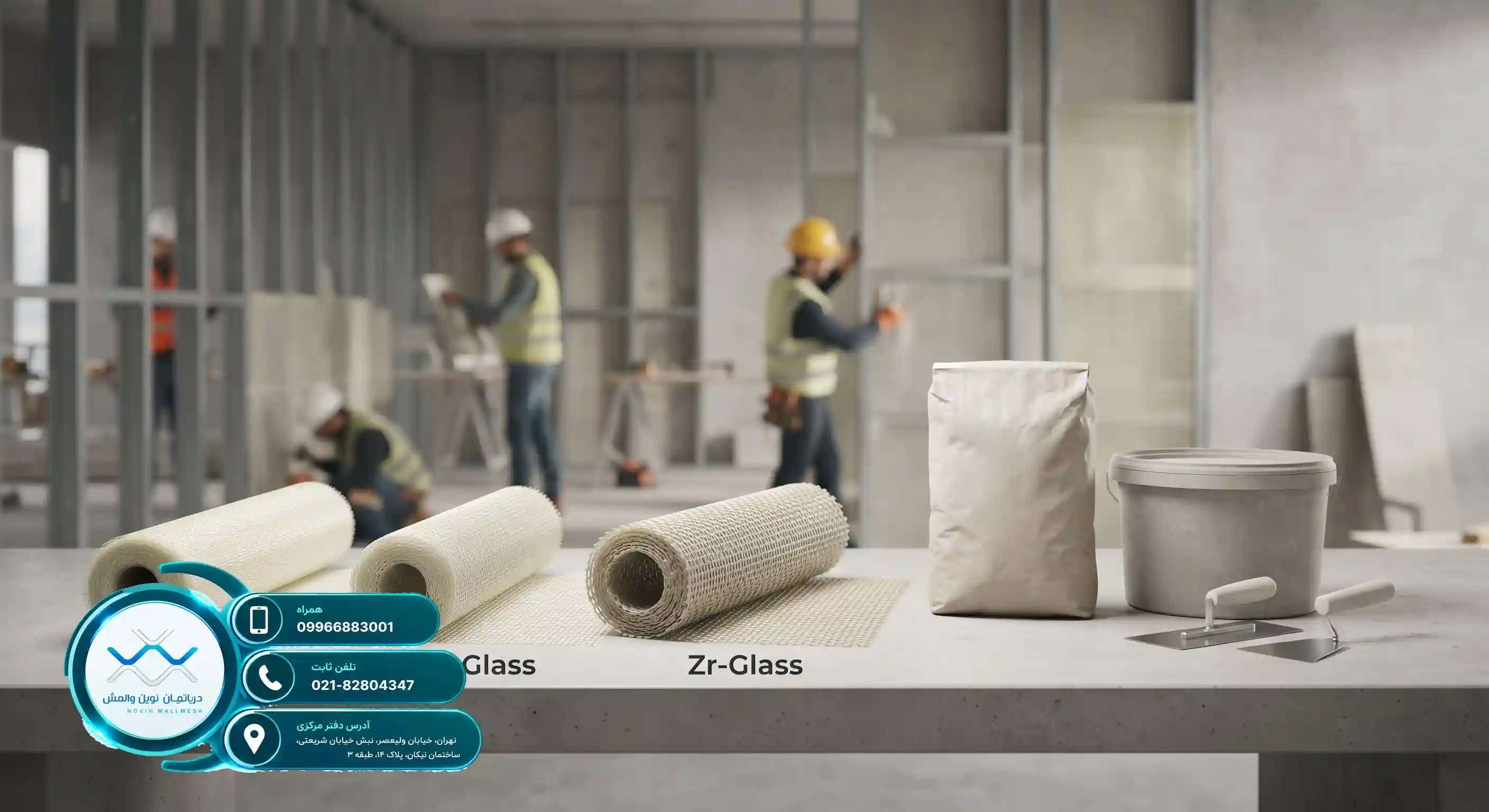
One of the main objectives in designing these systems is crack control and uniform stress distribution. In this regard, wall mesh calculations include precise shear and tensile controls for fiberglass fibers (such as E-Glass and Zr-Glass samples) to prevent brittle failure.
The optimal design of non-structural walls requires commitment to code regulations and the use of high-quality engineered materials.