Step-by-Step Guide to Installing Fiberglass Wall Mesh in Structures
Step-by-Step Guide to Installing Fiberglass Wall Mesh in Structures
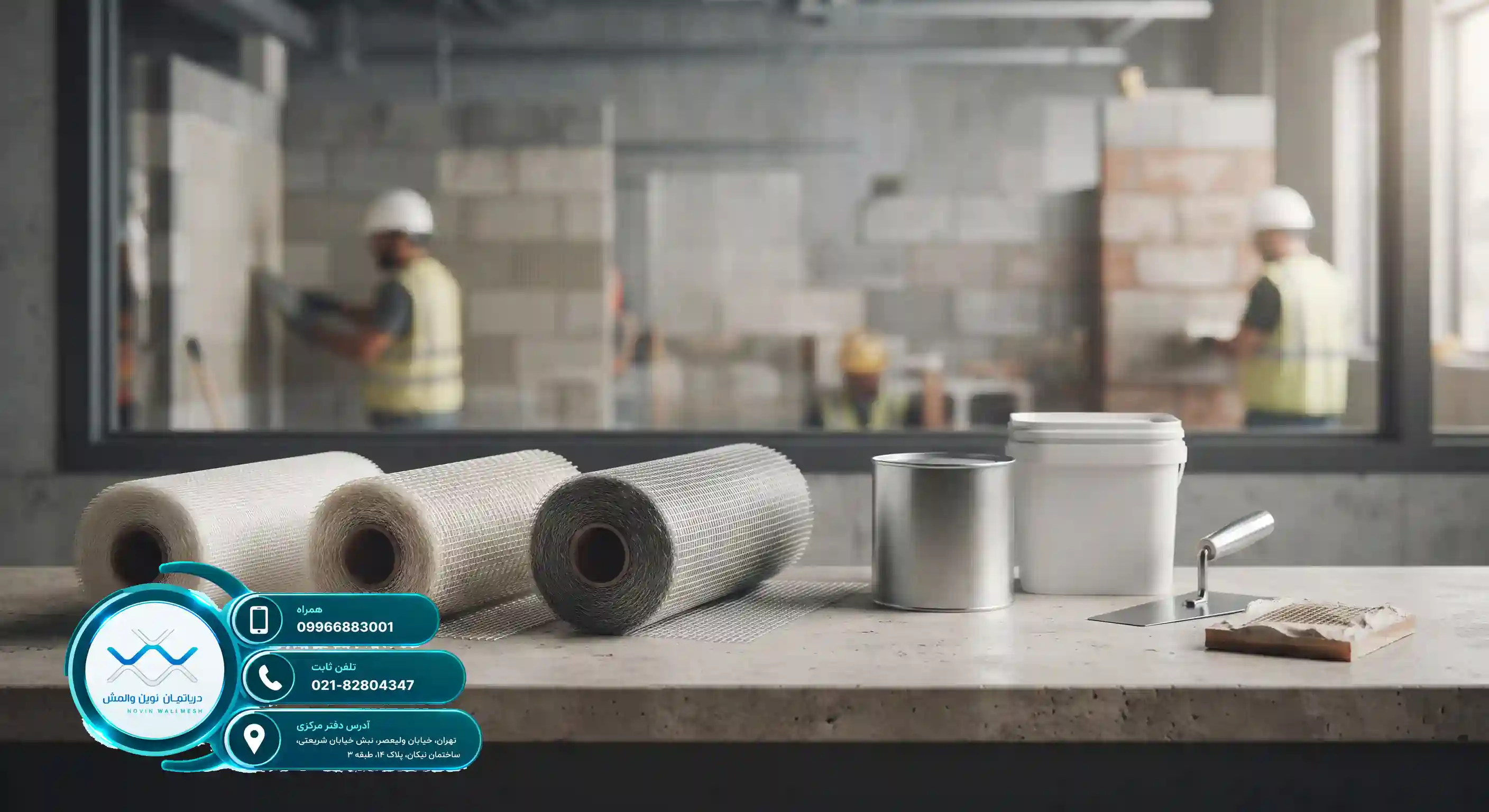
Introduction to the Importance of Retrofitting Non-Structural Walls
In recent years, seismic design codes have paid special attention to the performance of non-structural components, especially internal and external walls and partitions. Past events have shown that a major portion of financial and human losses in earthquakes is caused by the collapse of these very non-structural walls. To solve this problem, modern technologies have replaced traditional methods. One of the most efficient solutions is the use of the wall mesh system, which is recognized as a modern alternative to traditional metal wall posts.
By providing precise engineering solutions, the Novin Wall Mesh Department has provided a platform for engineers and construction executors to bring the highest level of safety to their structures. Using this system not only significantly reduces the dead load of the building, but also dramatically increases project execution speed. Based on research published in Fiberglass Mesh in Structural Retrofitting, the use of fiber-reinforced polymer reinforcement plays a very prominent role in preventing the sudden collapse of infills.
The Key Role of the Fiberglass Grid in the Structure
The wall reinforcement system using fiberglass mesh and plaster maintains the integrity of the wall against in-plane and out-of-plane forces. This grid, along with wall mesh prices and a step-by-step guide to installing the mesh on a concrete wall, has become one of the hot topics in civil engineering. Engineers can noticeably improve the seismic performance of the structure by utilizing this technology.
- Increasing the ductility of non-structural walls
- Preventing surface and deep cracks in the wall
- Eliminating the heavy costs of executing cumbersome metal wall posts
For a more detailed examination of the economic benefits of this technology, reading the article Price Comparison of Fiberglass Wall Mesh vs. Rabits Wire Lath in Wall Reinforcement is suggested to gain a better perspective on cost optimization.
Standard Tools and Materials in the Project
Successful execution of any engineering system requires the use of high-quality materials and standard tools. In the implementation of the wall mesh system, the choice of material type has a direct impact on the final durability of the work. By supplying various specialized products including E-Glass, C-Glass, and Zr-Glass fiberglass meshes along with cement-based and gypsum-based plaster, the Novin Wall Mesh Department covers all the execution needs of contractors.
Based on international standards mentioned in sources such as Fiberglass Mesh in Structural Retrofitting, matching the mechanical properties of the fibers with the type of plaster used is of utmost importance. Below is the table of essential consumable items for implementing this system:
| Row | Material / Tool Name | Main Application |
|---|---|---|
| 1 | Fiberglass Mesh (E-Glass or Zr-Glass) | Tensile reinforcement and uniform stress distribution |
| 2 | Cement-based or Gypsum-based Plaster | Surface coating and bonding the grid to the wall substrate |
| 3 | Angle or Discontinuous Channel | Restraining free edges of the wall and connection to the column |
| 4 | Epoxy Adhesive or Mechanical Wall Plug | Secure connection of restraining hardware to the concrete or steel structure |
Smart Material Selection
Choosing the appropriate mesh is done depending on environmental conditions and wall type. For example, in humid environments, the use of alkali-resistant meshes (Zr-Glass) is mandatory. Also, by reviewing wall mesh prices and the lightness benefits of the fiberglass grid in execution, you will realize how this system reduces the dead load of the building and enhances overall safety.
Very Important Note: Never use miscellaneous materials without technical approval for wall mesh execution, as this undermines the entire integrity of the seismic system.
Step-by-Step Guide to Installing Novin Wall Mesh on Old Brick Walls
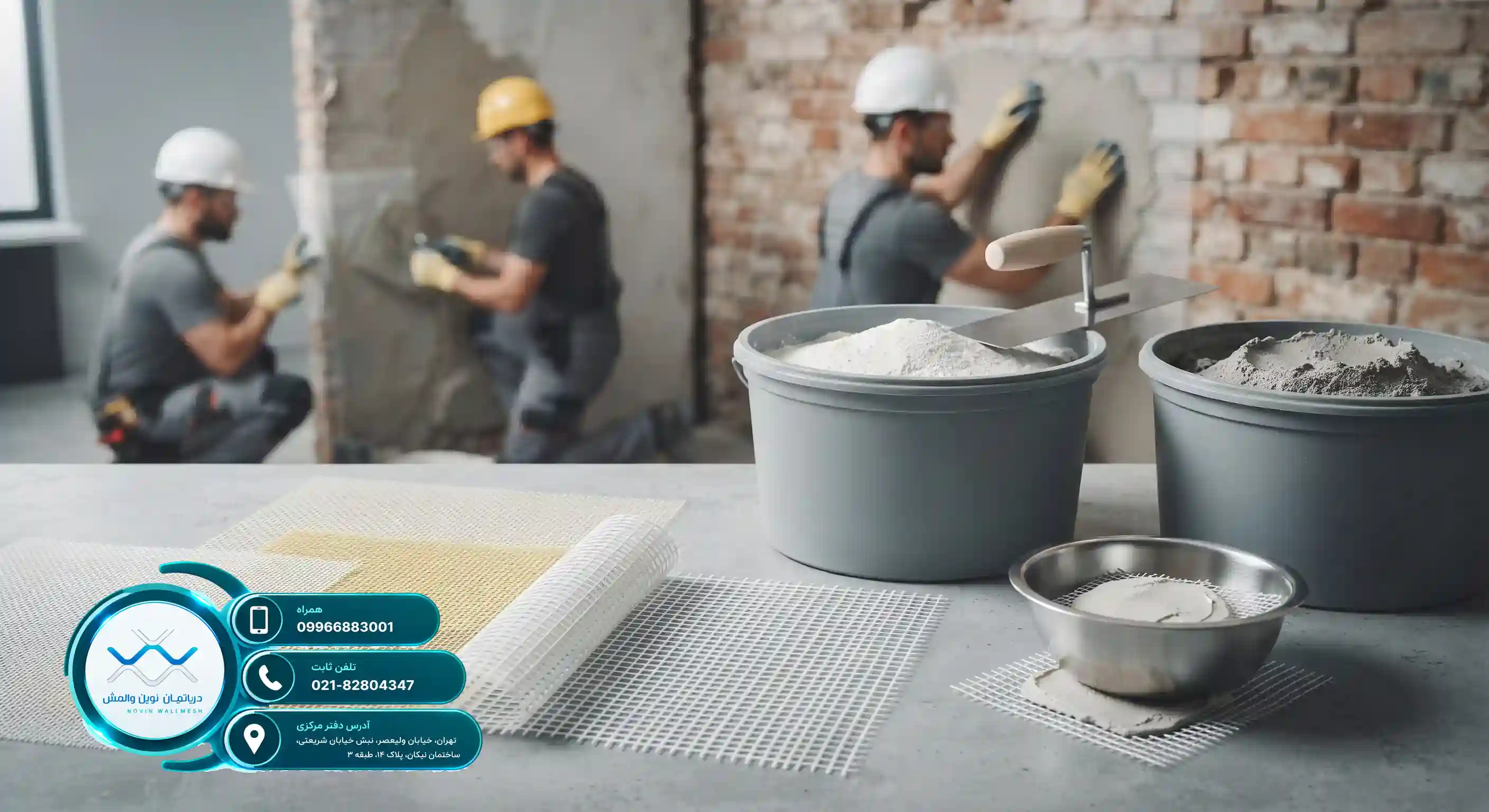
Why do old brick walls need retrofitting?
Old brick walls make up a large part of Iran's urban fabric; from historical buildings and old houses to operating factories and warehouses. Over the decades, these walls have been exposed to moisture, temperature changes, structural settlement, and most importantly, frequent earthquakes. Most of these walls lack any reinforcement and suffer severe damage and debris collapse even in moderate earthquakes.
Novin Wall Mesh or the wall reinforcement system with fiberglass mesh and gypsum- or cement-based plaster is a modern and proven method to increase the resistance of these walls. In this method, a layer of fiberglass mesh with a special weave is placed between two layers of plaster, creating a reinforced skin on the wall that acts like armor to prevent joint opening, cracking, and wall collapse.
Key advantages of Novin Wall Mesh over traditional methods
In traditional methods, strengthening non-structural walls required complete demolition and reconstruction or the implementation of steel and reinforced concrete, which was both costly and imposed a significant dead load on the structure. However, with the emergence of this technology in Tarsazeh products, shear and flexural strength of the wall can be significantly improved without increasing noticeable load.
- Significant increase in the wall's shear resistance against earthquake forces
- No increase in the structure's dead load due to the very low weight of the materials
- Preservation of the appearance and historical texture of brick walls
- High execution speed compared to traditional methods
- Ability to be implemented on various brick, block, and cement surfaces
- Significant reduction in construction waste generation
International studies show that using novin fiberglass meshes in the construction industry as an innovative material increases the tensile strength of masonry walls by an average of several times, which is why it has performed acceptably in recent world earthquakes.
| Parameter | Traditional Method (Reinforced Concrete) | Novin Wall Mesh |
|---|---|---|
| Added weight to the structure | High | Very low |
| Execution time | Long | Short |
| Demolition of existing wall | Required in most cases | Not required |
| Total project cost | High | Balanced |
| Ability to maintain traditional appearance | Low | High |
Important note: Non-structural walls in old buildings usually lack any reinforcement and suffer severe damage even in moderate earthquakes. Retrofitting them is not a cost, but an investment to save human lives.
Complete list of tools and materials for Wall Mesh implementation
Before starting work, preparing a detailed list of tools and materials is the key to project success. Implementing Novin Wall Mesh on old brick walls requires materials that are compatible with the moisture-absorbing property of bricks and environmental conditions. Below is a complete list of requirements.
Required Tools
- Trowel, tape measure, and steel ruler for precise measurement of wall dimensions
- Hammer, nails, and nail gun (if temporary mechanical connection is needed)
- Industrial scissors or cutter for cutting fiberglass mesh
- Sandpaper or wire brush for cleaning the brick surface
- Plastering trowel, square, and hawk for plaster application
- Electric mixer for uniform mixing of plaster with water
- Laser device or plumb line to control surface flatness
- Safety equipment including glasses, gloves, and respiratory mask
Main Project Materials
Tarsazeh offers three types of fiberglass mesh for various applications. Choosing the mesh type depends on moisture conditions, wall type, and location of use. The characteristics of each are briefly described in the table below.
| Product Type | Main Characteristic | Recommended Application |
|---|---|---|
| Tarsazeh E-Glass Fiberglass Mesh | High tensile strength and economical price | Interior spaces and dry walls |
| Tarsazeh C-Glass Fiberglass Mesh | Better chemical resistance | Medium humidity environments |
| Tarsazeh Zr-Glass Fiberglass Mesh | Highest resistance to alkali and moisture | Outdoor spaces, basements, and very humid walls |
In addition to the mesh, you also need two types of plaster: Tarsazeh gypsum-based plaster for interior spaces and Tarsazeh cement-based plaster for outdoor and humid spaces. Each of these products, through precise formulation of raw materials, provides proper adhesion to the brick and mesh surface and guarantees the mechanical properties of the system.
To learn more about technology and innovation in this field, you can read the article on Fiberglass Mesh Innovations. Also, to receive the complete instruction manual, The Comprehensive Guide to Implementing Novin Wall Mesh in Non-Structural Walls is available to you.