Introduction to Compatible Mortar Types for Wall Mesh Plaster Substructure
Introduction to Compatible Mortar Types for Wall Mesh Plaster Substructure
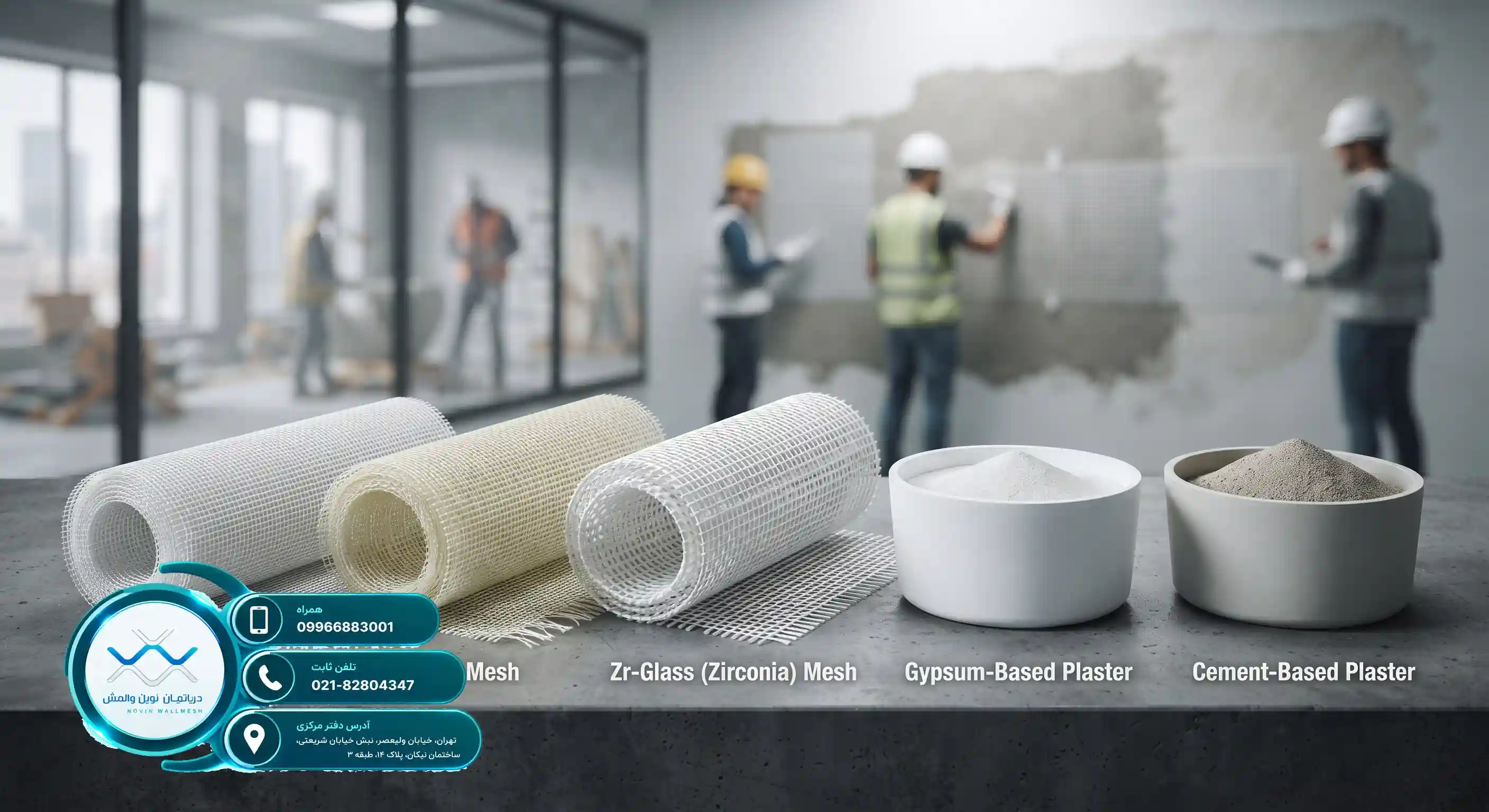
The Vital Role of Mortar and Substructure in the Retrofitting System
The modern retrofitting system for non-structural walls requires precise coordination among various components. One of the most critical parts that directly affects the performance of the entire system is the correct selection of mortar for wall mesh plaster. These mortars are responsible for transferring the applied loads to the fiberglass mesh grid and creating proper adhesion with the wall substrate.
At the Novin Wall Mesh department, engineers believe that flawless execution is impossible without using standard materials. The choice of mortar type is determined based on environmental conditions, wall type (brick, clay block, or AAC block), and the type of mesh used. For a better understanding of execution differences, you can read the article on how to mix and apply suitable mortar for wall mesh plaster, which provides useful technical details.
Why is principled substructure important?
A weak substructure can cause the plaster layer to detach from the wall surface, thereby rendering the entire retrofitting system ineffective. Therefore, understanding the physical and chemical properties of compatible mortars is considered a civil engineering requirement.
- Increasing the bond between masonry materials and fiberglass mesh
- Preventing hair-line and deep cracks
- Uniform distribution of stresses caused by earthquakes
- Improving durability and lifespan of non-structural walls
“The final quality of a retrofitted structure is the result of precision in selecting every single consumable material, including mesh and plaster.”
Technical Characteristics of Cement-Based Mortars
Due to high compressive strength and moisture resistance, cement-based mortars are one of the primary options for executing wall mesh plaster in external and humid environments. These mortars are highly compatible with glass fibers and form a strong bond.
Using high-quality products such as the meshes supplied in the Novin Wall Mesh department along with standard cement mortar significantly increases building safety. By reviewing the wall mesh buying guide for commercial complexes, owners and supervising engineers can obtain complete information about suitable materials for large commercial projects.
Advantages and Limitations of Cement Mortar
This category of mortars possesses extraordinary mechanical properties, but attention must also be paid to their setting time and weight.
The most important advantages of cement-based mortars include:
- Excellent resistance to changing weather conditions and freeze-thaw cycles
- Extremely high adhesion to various traditional and industrial masonry materials
- Complete compatibility with all types of alkali-resistant fiberglass meshes
However, the higher specific gravity of these mortars compared to gypsum samples necessitates careful calculation of the building's dead load.