How to Optimize the Curing Time of Wall Mesh Plaster?
How to Optimize the Curing Time of Wall Mesh Plaster?
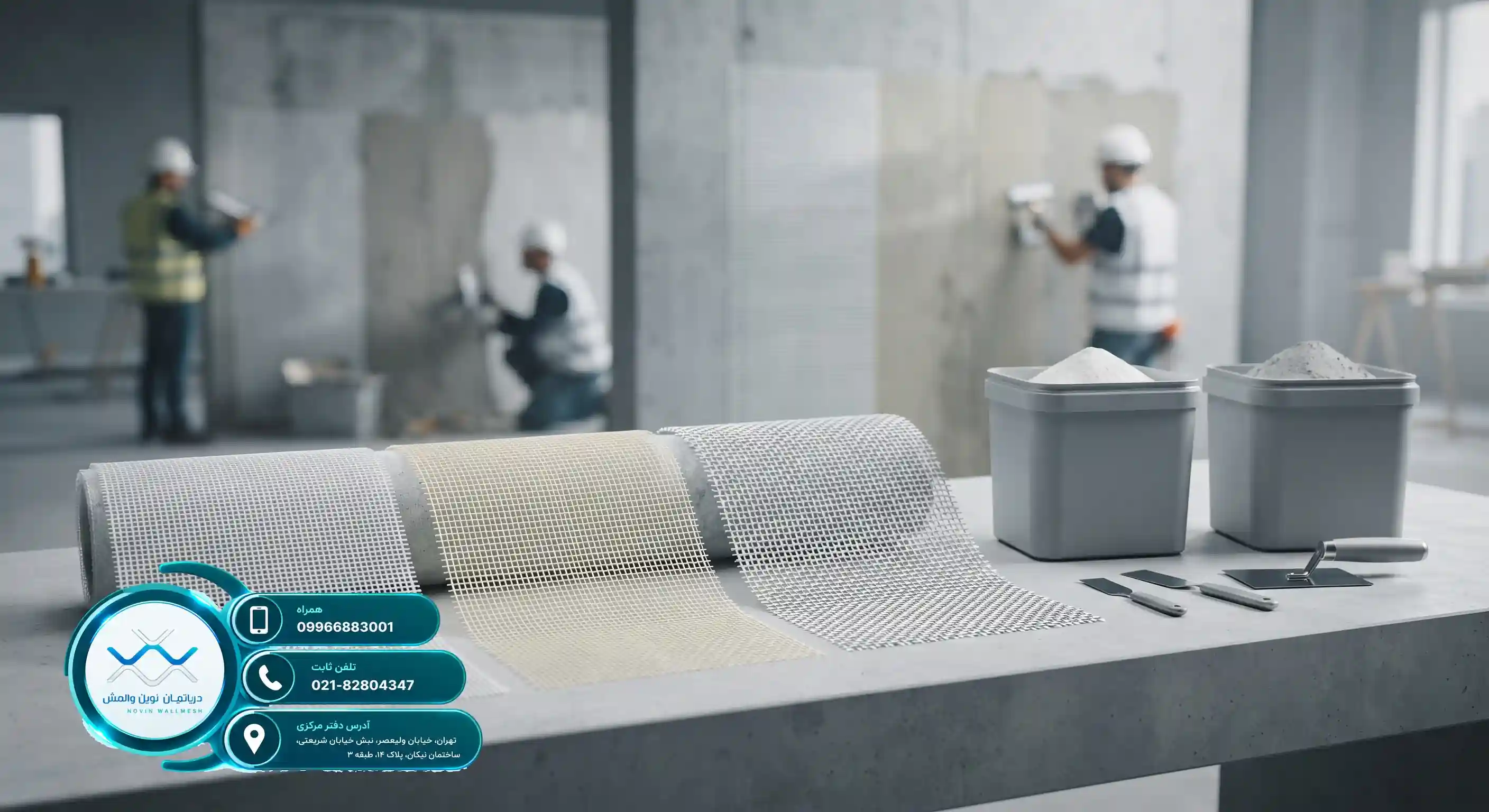
Introduction to Curing and the Mortar Hardening Process
The curing process is one of the most vital stages in the proper execution of structural reinforcement systems. When it comes to applying wall mesh plaster, the final quality of the work does not depend solely on selecting high-grade materials; the method of maintenance and providing appropriate moisture and temperature during the mortar hardening stage also play a decisive role. The Novin Wall Mesh Department, by supplying the best types of fiberglass mesh and specialized plasters, always emphasizes strict adherence to these guidelines.
Proper curing allows the mortar to achieve its design strength, prevents surface and deep cracking, and creates an ideal bond between the mesh and the wall substrate. If negligence occurs at this stage, all the execution efforts will be compromised, and the system will not perform as required against lateral forces such as earthquakes.
The Key Role of Moisture and Temperature in Mortar Stability
For the cement or gypsum in the mortar to reach complete hydration, the presence of water molecules is mandatory throughout the entire curing period. Rapid evaporation of mortar water due to wind, direct sunlight, or low air humidity will cause a severe drop in the mechanical strength of the wall mesh plaster.
- Preventing rapid drying shrinkage
- Ensuring optimal adhesion of the fiberglass mesh
- Increasing long-term durability against environmental stresses
Based on international standards, precise control of environmental parameters alongside the use of standard products such as How to check the authenticity of cement-based plaster when buying from Novin Wall Mesh Department? will guarantee the quality of project execution.
The Role of Weather in Mortar Hardening Speed
The climatic conditions of construction project locations have a direct impact on the curing schedule of wall mesh plaster. In hot and dry regions, the water inside the mortar evaporates at a very high speed; meanwhile, in cold regions, chemical reactions take place more slowly, and there is a risk of freezing for the water within the mortar.
Specialists at the Novin Wall Mesh Department recommend carefully reviewing the weather conditions for the next 72 hours before starting plaster application so that you can develop the best schedule to maintain the moisture of the wall surfaces. Neglecting this issue can severely increase maintenance costs.
How to Manage Temperature and Humidity to Benefit the Structure?
Controlling the execution environment requires engineering tools and techniques. The following table provides a quick guide for matching environmental conditions with plaster maintenance methods:
| Weather Condition | Main Challenge | Proposed Execution Solution |
|---|---|---|
| Hot and Dry | Rapid evaporation and thermal cracks | Continuous watering, using wet burlap, and shading |
| Cold and Humid | Slowed hydration and freezing risk | Using protective covers and anti-freeze additives |
| Moderate | Ideal conditions | Compliance with minimum standard base curing times |
To optimize all processes and reduce potential costs, reading the article How to reduce maintenance costs with wall mesh calculations? will provide you with valuable information.