Comprehensive Guide to What Wall Mesh Is and the Benefits of Using It in Structures
Comprehensive Guide to What Wall Mesh Is and the Benefits of Using It in Structures

An Introduction to Seismic Safety in Buildings
In recent years, seismic design codes have paid special attention to the vulnerability of non-structural components, particularly infill walls and partitions. Past destructive earthquakes have demonstrated that even if the main structural skeleton remains intact, the collapse of non-structural walls can cause irreversible loss of life and financial damage. For this reason, structural engineers have always sought modern, economical, and fast solutions to restrain these walls. Amidst this, the concept of «what wall mesh is» has emerged as one of the most efficient contemporary technologies replacing traditional methods such as heavy metal wall posts.
The use of traditional strengthening systems is often accompanied by challenges such as high weight, difficult connection to beams and columns, and the creation of thermal bridges. Therefore, wall mesh price and guide for retrofitting non-structural walls shows to what extent this modern method has been able to reduce implementation costs while improving the seismic performance of the wall. Non-structural walls require comprehensive restraint in both out-of-plane and in-plane directions. Modern systems prevent the concentration of forces at specific points by uniformly distributing stress.
At Novin Wall Mesh Department, utilizing the most up-to-date engineering standards, we have developed solutions that not only meet the requirements of Standard 2800 but also significantly increase project execution speed. Choosing this system means making a smart investment in the structural safety and stability against potential earthquakes.
Engineering Structure of the Modern Wall Reinforcement System
To accurately understand what wall mesh is, we must examine its constituent components separately. This system generally consists of three main parts: fiberglass mesh (glass fiber net), mineral plaster (gypsum or cement base), and restraining angles or channels. The combination of these components together creates an integrated and flexible network capable of well withstanding lateral loads caused by earthquakes.
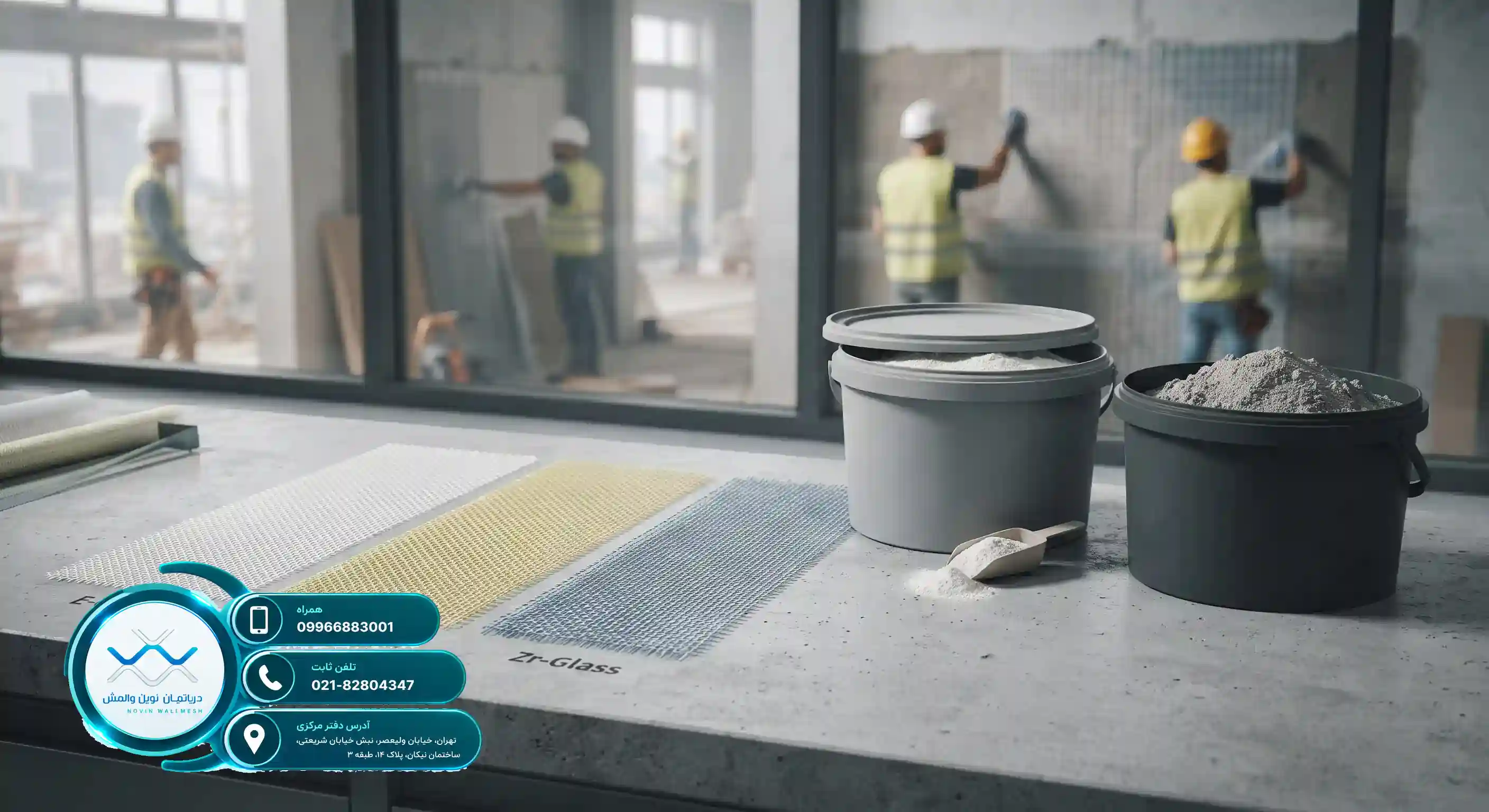
Glass fiber nets are divided into different categories based on their material and coating type, such as E-Glass, C-Glass, and Zr-Glass, with the latter type having extraordinary resistance against the alkaline environments of concrete and gypsum. For more specialized projects, studying the wall mesh buying guide for high-rise structures provides engineers with valuable information regarding the selection of the mesh type appropriate for the height and wind exposure of the structure. In this system, the mesh is first fixed onto the wall surface using special adhesives or fixing nails.
The next stage is the application of plaster, which is drawn over the mesh to form the final composite layer. In addition to reinforcing the wall, this layer provides a smooth and suitable surface for subsequent finishing operations. According to reviews conducted in reputable civil engineering sources such as retrofitting non-structural walls with wall mesh, using fiber-based composite materials minimizes the dead weight of the building and imparts a more ductile behavior to the wall.
Comprehensive Guide to What Wall Mesh Is and How to Properly Implement It in Buildings
Basic Concepts and Introduction to Modern Wall Mesh Technology
In recent years, Iran's construction industry has experienced profound transformations aimed primarily at enhancing structural safety against earthquakes and minimizing loss of life and property. One of the most vulnerable parts of buildings during an earthquake is non-structural walls (such as peripheral walls, infill walls, and partitions). To address this engineering challenge, an advanced technology called wall mesh has emerged. But what is wall mesh really, and how has it managed to replace traditional methods like heavy steel wall posts?
The system for reinforcing and retrofitting non-structural walls using glass fibers, or fiberglass mesh, along with special plaster (gypsum or cement-based), creates an integrated and flexible system that improves the seismic behavior of the wall without the need for heavy steel boxing. In this system, lateral loads caused by earthquakes are distributed homogeneously across the wall surface instead of concentrating at specific points.
Tarsaze company, as a pioneer in the field of retrofitting and reinforcing non-structural walls, offers a computerized and engineered range of products including E-Glass fiberglass mesh, C-Glass fiberglass mesh, Zr-Glass fiberglass mesh, gypsum-based plaster, and cement-based plaster. These equipment help engineers execute more optimal designs.
Based on modern engineering standards, for a better understanding of legal regulations, we suggest reading the article What Are the New Engineering Organization Rules Regarding Wall Mesh and Its Implementation? to become more familiar with execution requirements.
Constituent Components and Consumed Materials in the Wall Mesh System
To have a proper understanding of how this system works, we must carefully examine its constituent components. Accurate material knowledge is the key to the flawless execution of any civil engineering project. The wall mesh system consists of several key and standard components, each playing a vital role in the ultimate stability of the wall.
The main element of this system is the fiberglass net or mesh, which is produced in various types:
- E-Glass Fiberglass Mesh: Suitable for regular and indoor environments with high tensile strength.
- C-Glass Fiberglass Mesh: Featuring high chemical resistance against alkaline compounds.
- Zr-Glass Fiberglass Mesh: Containing zirconia, ideal for humid environments and severe alkaline conditions such as cement plaster.
In addition to the mesh, plasters play an important role as a bonding substrate. Tarsaze gypsum-based plaster is used for interior walls, and Tarsaze cement-based plaster is used for exterior and humid environments. These materials complete the structural performance of the fiber network by creating excellent adhesion.
It is worth noting that a similar technology is also used in the exterior facade of buildings with different approaches; for example, similar global technologies such as wall mesh in the EIFS system simultaneously ensure energy efficiency and facade stability.
Technical and Economic Comparison of Wall Mesh with Traditional Metal Wall Posts
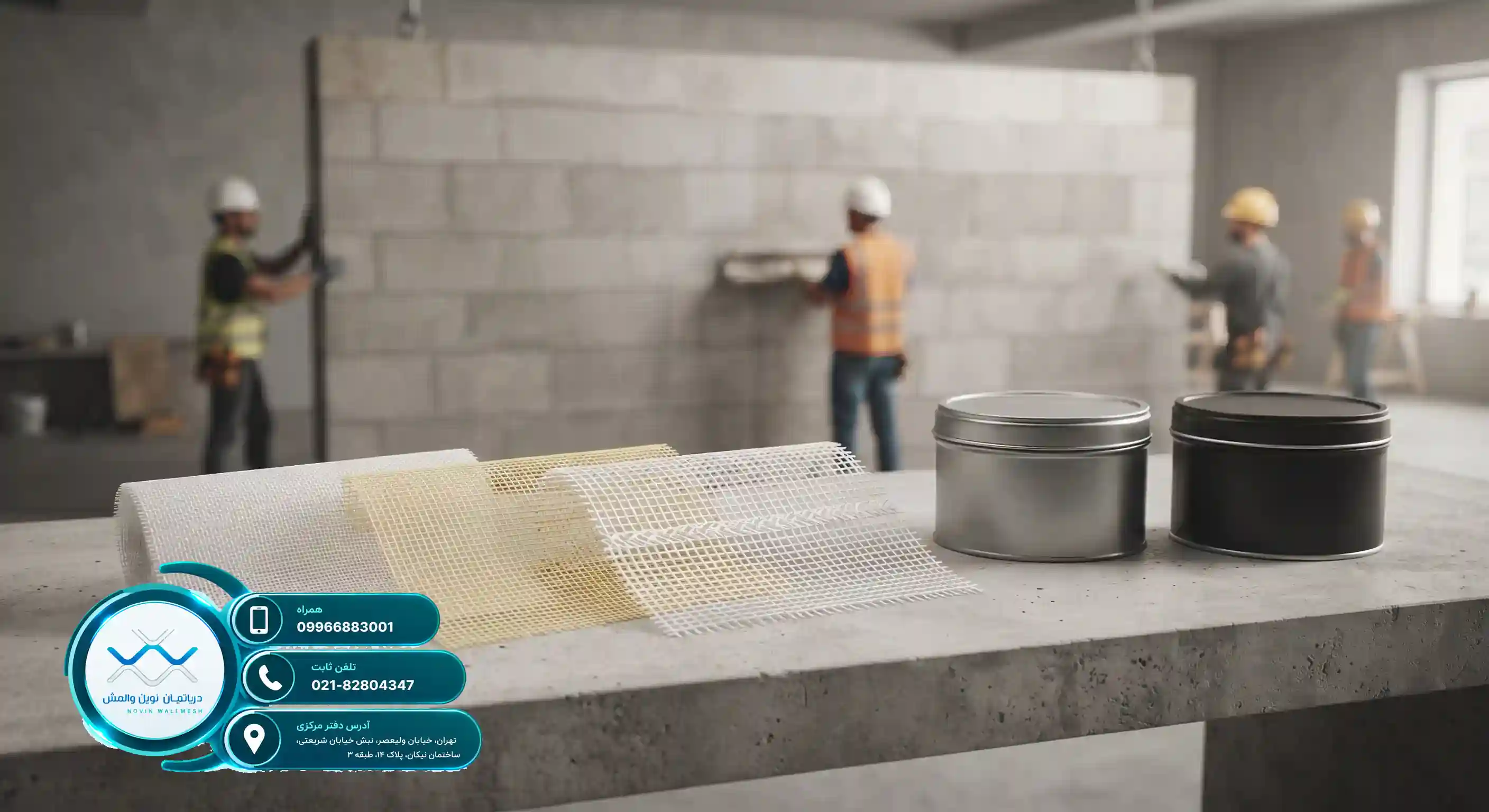
In past decades, using steel profiles (angles, channels, and boxes) as wall posts was the most common method for restraining non-structural walls. However, with the skyrocketing prices of steel and the emergence of numerous execution challenges, engineers looked for better engineered alternatives. In this section, we have prepared a table for a detailed comparison of these two systems.
| Comparison Index | Traditional Metal Wall Post | Tarsaze Wall Mesh System |
|---|---|---|
| Total Execution Cost | Very high due to iron prices | Economic and cost-effective |
| Execution Speed | Slow (requires welding and cutting) | Very fast and easy |
| Dead Weight of Structure | Heavy and extra load on foundation | Very lightweight and optimal |
| Corrosion Resistance | Poor (requires frequent anti-rust treatment) | Excellent (uses anti-rust fibers) |
As seen in the table, using engineered products like Tarsaze E-Glass Fiberglass Mesh not only reduces costs but also significantly upgrades the engineering quality of the project.
Step-by-Step Installation and Proper Execution Stages of Wall Mesh on Site
Precise and principled execution of the wall mesh guarantees its optimal performance during an earthquake. Following the sequence of execution stages is of utmost importance. For more comprehensive information in this regard, you can read the specialized article What Is the Installation and Execution Method of Wall Mesh and What Equipment Does It Require?.
The general stages of work execution are as follows:
- Wall Surface Preparation: Complete cleaning of the surface from any dust, grease, or mortar waste to increase adhesion.
- Execution of the First Plaster Layer: Applying a thin layer of Tarsaze gypsum or cement-based plaster onto the wall surface.
- Installing Fiberglass Mesh: Placing the fiberglass net (such as Zr-Glass mesh for humid environments) on the wet plaster layer and pressing it for stabilization.
- Execution of the Second Plaster Layer: Completely covering the mesh with a second layer of plaster to create a protective cover and uniform thickness.
Key Point: During all execution stages, the overlap of the fiberglass mesh edges must be observed by at least 10 to 15 centimeters to maintain the continuity of the reinforcement network.
Using standard Tarsaze equipment during these stages greatly facilitates the execution process for construction teams.