Comprehensive Guide to Modern Wall Mesh Execution with Fiberglass Mesh
Comprehensive Guide to Modern Wall Mesh Execution with Fiberglass Mesh
A Modern Revolution in Structural Engineering and Non-Structural Walls
Non-structural walls and infills have always been among the most vulnerable components of buildings against lateral forces such as earthquakes. In traditional methods, the use of heavy steel and concrete tie columns was common, which, in addition to imposing a high dead load on the structure, also entailed high execution costs. Today, with the advent of modern wall mesh technology, civil engineers' approach to wall reinforcement has completely transformed.
The wall mesh system is based on the use of fiberglass mesh networks and special plaster (gypsum or cementitious) applied to the wall surface. This method not only does not increase the dead weight of the building, but also creates unparalleled integration across the entire wall surface. For more familiarity with the details of this system, reading the Comprehensive Guide to Modern Wall Mesh Execution in Non-Structural Walls will be very useful.
At Tarsازه, by utilizing up-to-date knowledge and engineered products, we provide solutions that, while fully complying with codes, significantly increase project execution speed. Choosing high-quality and standard materials is the first step towards ensuring structural safety against earthquakes.
Structural Advantages of Modern Systems Over Traditional Methods
- Elimination of cumbersome steel tie columns and reduction of iron procurement costs
- High flexibility and absorption of stresses caused by lateral structural deformations
- Full compatibility with various Tarsازه gypsum-based and cement-based plasters
- High execution speed without the need for complex welding
The Vital Role of Fiberglass Mesh in Reinforcing Non-Structural Walls
The beating heart of the wall mesh system is the fiberglass mesh or net. The quality, weight (grammage), fiber type, and tensile strength of these meshes play a direct role in the overall performance of the system during an earthquake. The Tarsازه brand, by offering a complete portfolio of products including E-Glass fiberglass mesh, C-Glass fiberglass mesh, and Zr-Glass fiberglass mesh, covers the diverse needs of construction projects.
E-Glass meshes are suitable for general applications and standard residential projects, while alkali-resistant or Zr-Glass meshes are specially designed for high pH environments and cementitious plasters to have 100% resistance against cement alkaline corrosion. Supplementary information regarding costs and regulations is included in the article All About Modern Wall Mesh Fiberglass Mesh Price and Wall Post Executive Regulations.
According to investigations conducted in reputable construction industry sources such as Modern Wall Mesh Fiberglass Mesh, the use of engineered glass fibers significantly increases the lifespan of infill walls.
Tarsازه Product Categorization
| Mesh Type | Main Feature | Suggested Application |
|---|---|---|
| Tarsازه E-Glass | High tensile strength | Interior walls with gypsum plaster |
| Tarsازه Zr-Glass | Alkalis-Resistant | Exterior facade and cementitious plasters |
Compliance with Standard 2800 and Appendix 6 Regulations
The execution of any retrofitting system in concrete and steel structures requires strict compliance with national regulations and standards. Appendix 6 of Iran's Standard 2800 defines a specific framework for the seismic restraint of non-structural walls. Tarsازه's modern wall mesh system is designed entirely in compliance with these regulations, and design engineers can use it with peace of mind in their execution plans.
Observing allowable wall spacing, using appropriate fiberglass mesh grid dimensions, and correctly executing plaster layers are among the items that require special attention. In this regard, Tarsازه specialists are ready to provide specialized consultations to design engineers and qualified executors to guarantee the final quality of the work.
Paying attention to executive details at the edges of columns and beams prevents stress concentration and the formation of local cracks.
Most Important Code Notes
- Controlling the wall length-to-thickness ratio according to Appendix 6 regulations
- Using mesh with grammage and grid dimensions approved by reputable laboratories
- Continuous supervision of plaster layer execution and their uniform thickness
Executive Stages in Interior Parts of the Building
The principled execution of wall mesh requires going through specific stages so that the system has maximum efficiency. Interior walls, due to their specific environmental conditions, are usually reinforced with gypsum plasters. For additional information in this field, be sure to read the article Comprehensive Guide to Installation and Execution of Modern Wall Mesh in Interior Walls.
The first step in executing modern wall mesh is preparing the wall surface. The wall surface must be free of any dust, grease, or loose particles. After preparation, the first layer of Tarsازه gypsum-based plaster is applied, and immediately the fiberglass mesh is placed on it and embedded into the layer with precise troweling.
Executive Steps Summarized
| Stage | Operation Description | Related Tarsازه Product |
|---|---|---|
| 1 | Sub-base preparation and wall surface cleaning | Special Primer |
| 2 | Executing the first plaster layer | Tarsازه Gypsum-Based Plaster |
| 3 | Installing and fixing the mesh | E-Glass Fiberglass Mesh |
Modern Protective and Reinforcing Coatings
The success of a modern wall mesh system is not limited to the fiberglass mesh alone; the type of plaster used plays a significant role in shear transfer and wall integration. With advanced formulation, Tarsازه has introduced high-quality gypsum-based and cement-based plasters to the market that create extraordinary adhesion with blocks and fiberglass mesh.
Gypsum-based plasters are ideal for indoor and dry interior environments because, in addition to ease of execution, they create a smooth surface ready for painting. Conversely, Tarsازه cement-based plasters, with moisture resistance, are considered the best option for facades and exterior spaces. International research published in Modern Wall Mesh Fiberglass Mesh shows that the correct combination of plaster and mesh doubles the wall's stability against cyclic earthquake loads.
Distinctive Features of Tarsازه Plasters
- High adhesion to various brick surfaces, clay blocks, and concrete blocks
- Significant reduction of hairline and shrinkage cracks on the wall surface
- Excellent mechanical resistance against impact and shear stresses
Reducing Construction Costs with Engineered Systems
In today's civil projects, cost optimization alongside safety preservation is one of the main concerns of employers. The use of traditional steel wall post methods imposes a heavy financial burden on the project due to steel price fluctuations and high welding and anti-rust costs. On the other hand, modern wall mesh is an economical and engineered solution that significantly reduces costs.
By eliminating heavy steel sections, the cost of material procurement, installation crew wages, and project execution time are all reduced. Tarsازه company, by offering high-quality and affordable products, has taken a big step toward optimizing construction economics.
Investing in Tarsازه fiberglass mesh and standard plasters brings a fast return on investment in projects.
Execution Cost Comparison
- At least 30% to 50% savings compared to traditional steel wall posts
- Reduction of material transportation costs due to the very low weight of meshes and plasters
- Minimizing material waste and execution scrap on site
Avoiding Technical Errors to Achieve Maximum Efficiency
Even the highest quality materials cannot show optimal performance if improperly executed. Recognizing common execution errors in the modern wall mesh system helps supervising engineers and executors deliver flawless quality. Among the most common errors is failing to observe sufficient overlap between fiberglass mesh strips.
Insufficient mesh overlap causes the wall continuity at connection points to rupture during an earthquake. Also, using substandard plasters or failing to observe the standard thickness of the plaster layer are other dangerous errors. The Tarsازه collection always recommends that execution operations be performed under the supervision of specialists and based on technical instructions.
Key Tips to Prevent Execution Errors
- Observing a minimum overlap of 10 to 15 cm at mesh strip connection points
- Moisturizing the wall surface before executing gypsum or cement plaster
- Guaranteeing complete mesh coverage by plaster such that the mesh is located in the center of the layer
Step Towards Safer and More Sustainable Structures
Iran's construction industry is increasingly leaning towards industrialization, lightweighting, and the use of modern technologies. The modern wall mesh system, as one of the superior achievements of structural engineering, has found its place as a reliable replacement for traditional wall posts. This growing trend indicates the increasing awareness of engineers and employers regarding the importance of seismic safety for infills.
Focusing on research and development, product quality enhancement, and providing specialized solutions, Tarsازه will remain a pioneer in this arena. Our mission is to build a safer future for the country's construction industry. To receive specialized consultations and procure various fiberglass meshes and plasters, you can visit the Tarsازه website.
The future of modern construction is built upon lightweight, durable, and environmentally friendly materials.
Why Tarsازه is Engineers' First Choice?
- Complete product variety including various E-Glass, C-Glass, and Zr-Glass meshes
- Quality guarantee and full compliance with national and international standards
- Technical and engineering support in all stages of design and execution
| Question | Answer |
|---|---|
| What is modern wall mesh? | A modern system for reinforcing and retrofitting non-structural walls using fiberglass mesh and plaster. |
| What is the main advantage of wall mesh over steel wall posts? | Reduction of dead weight, elimination of welding, high execution speed, and reduction of execution costs. |
| What types of fiberglass mesh are offered by Tarsازه? | E-Glass, C-Glass, and Zr-Glass meshes tailored to different project needs. |
| What is the difference between E-Glass and Zr-Glass mesh? | Zr-Glass mesh has an alkali-resistant coating and is more suitable for cementitious and exterior environments. |
| Is wall mesh compatible with Standard 2800? | Yes, it is designed and executed entirely in compliance with the regulations of Appendix 6 of Standard 2800. |
| What type of plaster is used in wall mesh? | Gypsum-based plasters for building interiors and cement-based plasters for facades and exterior spaces. |
| Does wall mesh execution require a specialized crew? | Its execution is simple, but observing technical tips and manufacturer guidelines is essential for high quality. |
| How much should the overlap of mesh strips be? | A minimum of 10 to 15 cm is recommended at the connection points of adjacent strips. |
| How can one inquire about the daily prices of Tarsازه products? | You can proceed by contacting sales experts or visiting the Tarsازه website. |
| Does wall mesh control wall cracks? | Yes, the fiberglass network distributes stresses and prevents the formation of hairline cracks. |
Appendix 6 of Iran's Standard 2800 and executive guidelines of the Association of Calculator Engineers.
Comprehensive Guide to Modern Wall Mesh Execution in Buildings
Comprehensive Guide to Modern Wall Mesh Execution in Buildings
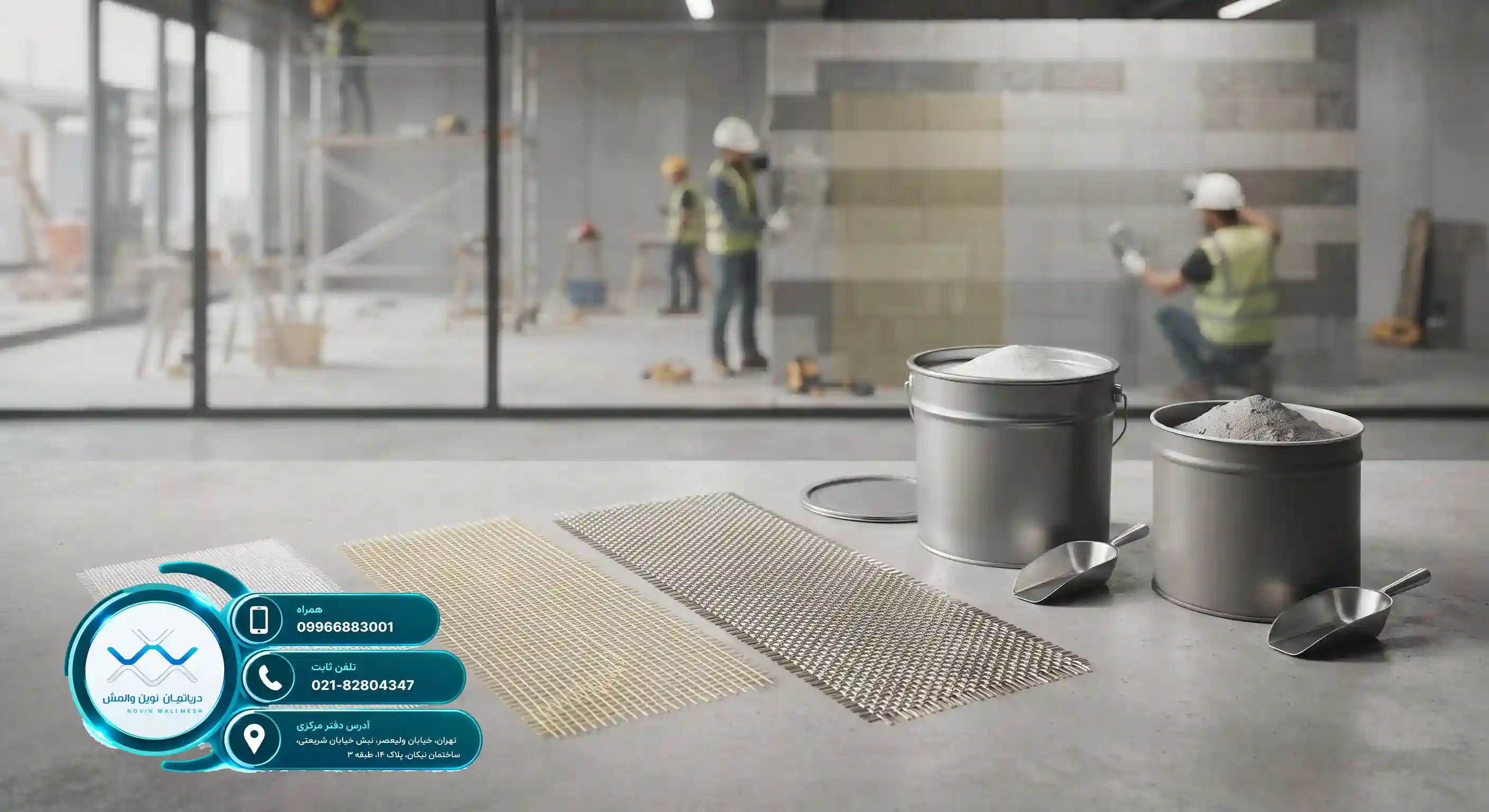
Introduction to the Revolution in Non-Structural Wall Retrofitting
Non-structural or infill walls are vital yet vulnerable components against earthquakes. In the past, traditional metal wall-posts were commonly used, which entailed exorbitant costs, high dead weight, and numerous execution problems. Today, with the advent of modern wall mesh technology, civil engineers' approach has undergone a fundamental transformation. This technology not only reduces structural weight but also dramatically increases execution speed and safety.
The Key Role of Wall Mesh in Structural Stability
Based on earthquake engineering standards, infill walls must exhibit flexibility against lateral loads. Modern systems distribute earthquake forces across the wall surface by creating an integrated network of composite materials. This method is recognized as a reliable alternative to traditional angle bracings and is preferred by many structural designers.
Tarsازه (Tarsazeh) company has taken a giant leap toward upgrading the quality of construction projects by offering standard products such as Tarsazeh E-Glass Fiberglass Mesh. With high tensile strength, these meshes effectively control stresses caused by settlement and earthquakes.
- Reduction of the building's dead weight
- Elimination of heavy welding and ironwork costs
- High flexibility against lateral loads
- Full compliance with the country's executive codes and regulations
For greater familiarity with the executive details of these systems in various clay brick walls, reading the specialized article Things to Know for Executing Wall Mesh on Clay Brick Walls is recommended, as it provides extremely valuable tips for executors.
The Role of Fiberglass Mesh in Reinforcing Non-Structural Walls
The choice of fiberglass mesh type depends entirely on the environmental conditions and technical specifications of the project. There are various products on the market, each possessing its own specific characteristics. Meanwhile, using high-quality Tarsazeh products will guarantee the long-term durability and stability of the wall. Accurate understanding of these materials is of particular importance for supervising engineers.
Tarsazeh Engineered Mesh Types
Tarsazeh produces a wide range of fiberglass meshes, which include:
- Tarsazeh E-Glass Fiberglass Mesh: Suitable for general projects with standard tensile strength and high efficiency.
- Tarsazeh C-Glass Fiberglass Mesh: Possesses favorable chemical resistance against specific and corrosive environments.
- Tarsazeh Zr-Glass Fiberglass Mesh: Contains zirconia, ideal for alkaline environments and adjacent to gypsum and cement.
Based on building facade engineering studies, similar reinforcement technologies are also applied in external thermal insulation systems; for instance, advanced technologies of wall mesh in EIFS systems demonstrate the importance of using resistant meshes in building facades, which significantly contributes to thermal and mechanical stability.
For the flawless execution of these systems, many engineers first thoroughly examine the substrate. To this end, studying the specialized guide How to Execute Substructure in the Modern Fiberglass Mesh Wall Reinforcement Method can make the project execution path much smoother.
Comprehensive Guide to Modern Wall Mesh Cement-Based Plaster Prices in the Market
Comprehensive Guide to Modern Wall Mesh Cement-Based Plaster Prices in the Market
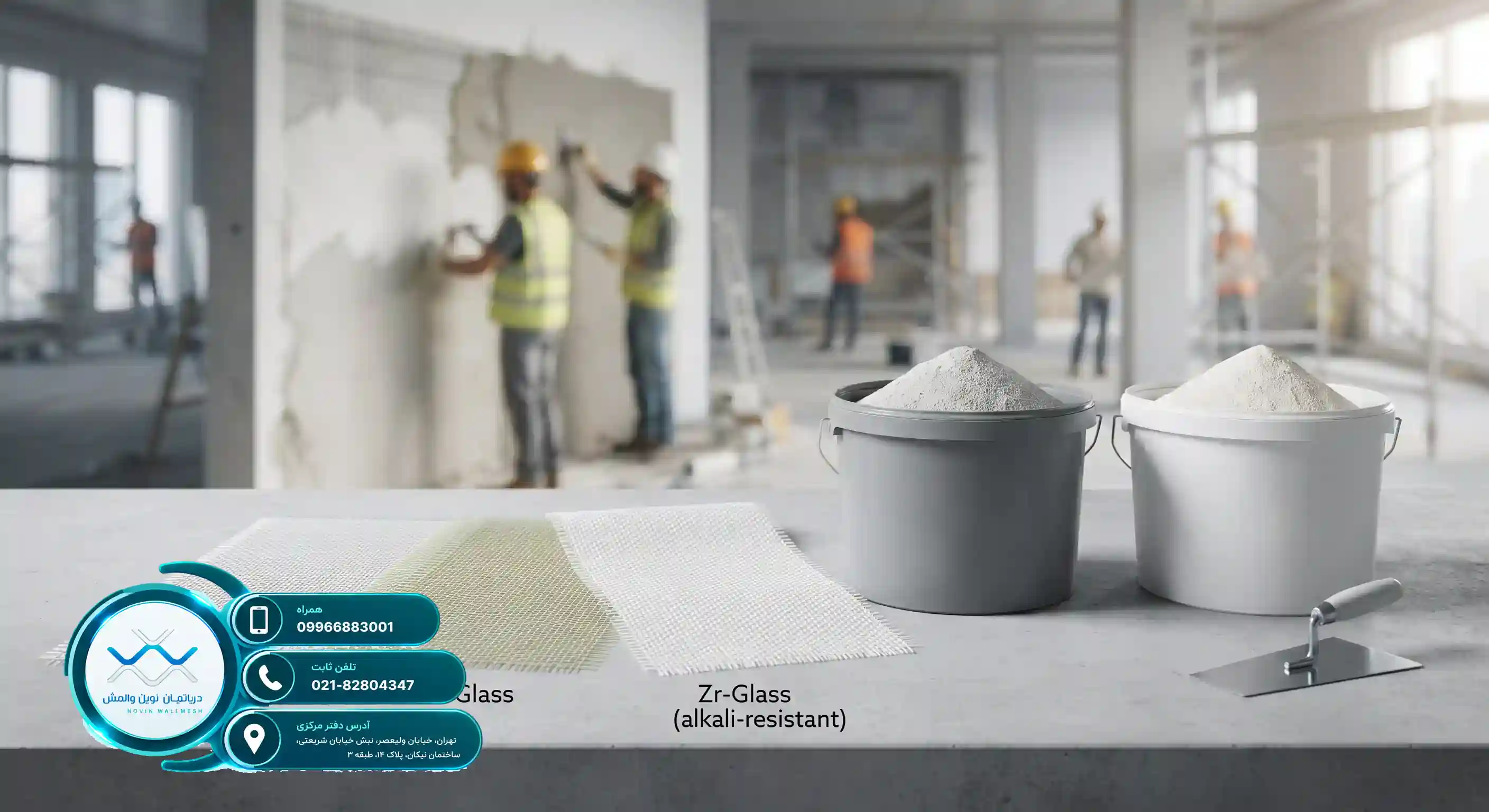
The Key Role of Cement-Based Plaster in the Wall Mesh System
In the modern construction industry, safety against earthquakes and lateral forces is of paramount importance. Modern wall mesh systems are recognized as a reliable and economical alternative to traditional metal wall posts. In this regard, the role of Tarsازه as a pioneer in providing non-structural retrofit engineering solutions is very prominent. The correct implementation of this system requires high-quality materials, including fiberglass mesh and special mortars. The right choice of raw materials guarantees the durability of the entire structure and prevents irreparable damage during an earthquake.
The wall mesh system consists of a network of glass fibers installed on walls and protected by a protective coating layer. To learn more about the global standards for these products, you can take a look at the standards of Wall Mesh Cement Plaster used in major international projects. These mortars act as an integrator and homogeneously distribute stresses caused by temperature changes and lateral forces across the wall surface.
Why is Cement Plaster Prioritized Over Other Options?
Cement-based plaster is the top choice of design engineers due to its excellent adhesion to the wall substrate, high mechanical strength, and stability under various weather conditions. When it comes to the price of modern wall mesh cement-based plaster, we must realize that this cost is negligible compared to the long-term safety it provides for the building. Later in this article, we will carefully examine the various dimensions of this pricing and the factors affecting it so that you can make the best decision for your projects.
Determining Parameters in the Construction Materials Market
The construction materials market is constantly subject to various fluctuations, and determining costs requires precise analysis. In the field of non-structural wall retrofitting, awareness of the factors influencing the price of modern wall mesh cement-based plaster helps project managers create accurate budgets. The quality of raw materials, the type of cement used, chemical additives that improve adhesion and tensile strength are all core pillars determining the final market rate of this product.
Moreover, as evident in the review of the difference in quality and price of wall mesh cement-based plaster in the Iranian market, different brands offer varying standards. Tarsازه’s standard products utilize advanced formulations to achieve the highest level of compliance with national executive regulations while offering a competitive price proportionate to quality.
The Role of Purchase Volume and Project Dimensions in the Final Cost
Another factor that directly affects costs is the scale of the project. To better understand this topic, reading the specialized article on the role of order volume in the price of modern wall mesh cement-based plaster projects is recommended. Bulk purchases generally qualify for tiered discounts, which can significantly reduce the overall costs of wall mesh implementation and economically optimize the project.
Comprehensive Guide to Modern Wall Mesh Implementation for Non-Structural Walls
Comprehensive Guide to Modern Wall Mesh Implementation for Non-Structural Walls
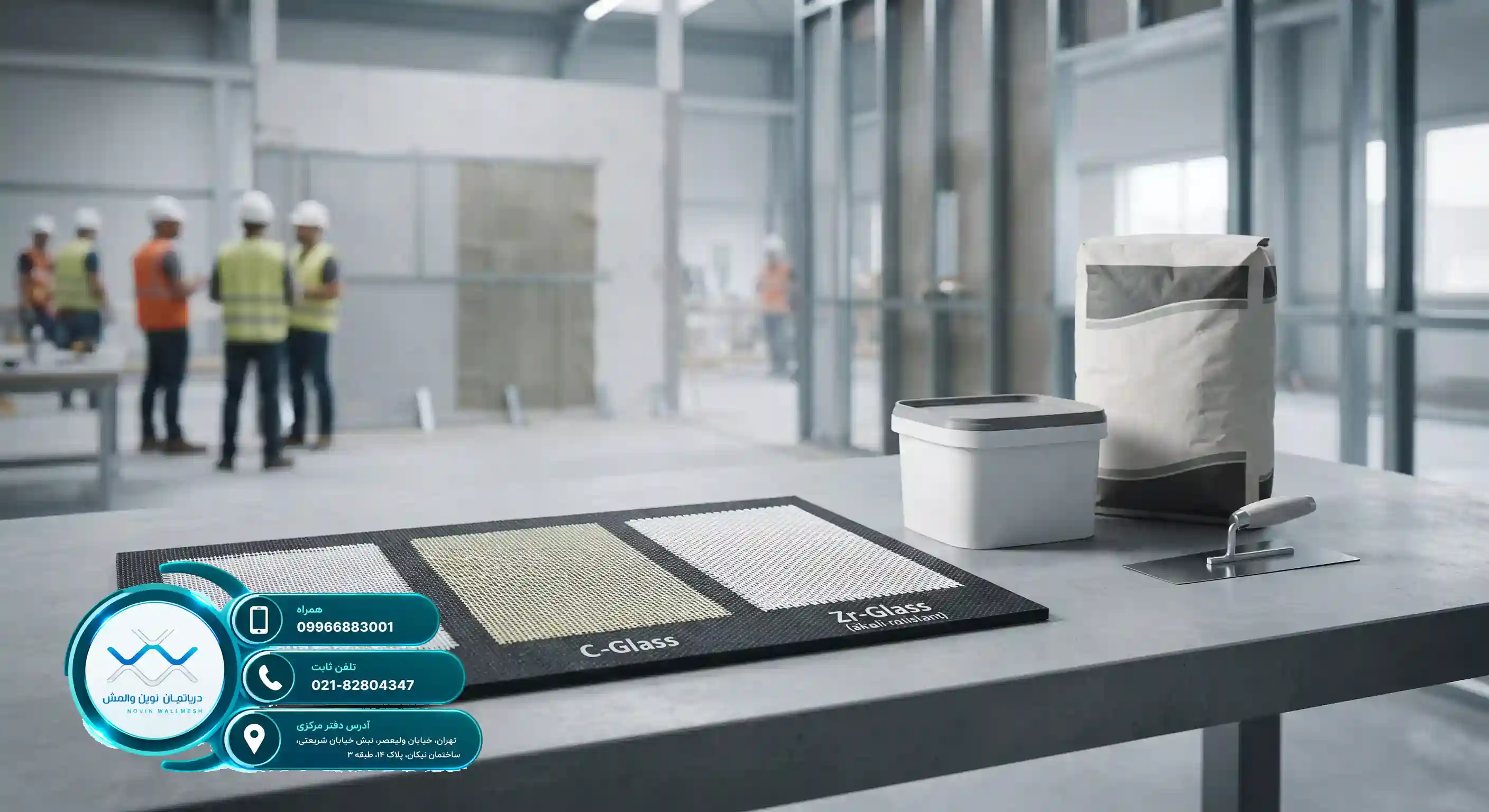
Familiarity with Engineering Developments in Non-Structural Wall Anchorage
In recent years, Iran's construction industry has witnessed fundamental changes in seismic regulations. The implementation of traditional systems such as angle brackets and intermittent channels, despite its long history, has driven engineers toward alternative methods due to operational problems and high costs. Modern Wall Mesh is considered an efficient alternative to older methods as an advanced technology, significantly increasing structural safety by eliminating heavy metal elements.
To better understand this evolution, reading the comprehensive guide for retrofitting non-structural walls with wall mesh is recommended for design engineers to become familiar with the code details of this system. Infill walls and partitions undergo lateral deformations during an earthquake. If the connection of these walls to the structural frame is not done properly, the connection shear phenomenon and progressive collapse will occur.
Based on technical reports published in international specialized authorities such as retrofitting non-structural walls with wall mesh, the use of non-metallic reinforcement systems causes uniform stress distribution across the wall surface and prevents stress concentration at the corners. Utilizing this up-to-date knowledge, Tarsازه specialists have developed products that meet the engineering needs of modern structures.
Structural Advantages of Modern Systems
- Reduction of the structure's dead load due to the elimination of heavy steel angle brackets
- Extremely high execution speed compared to traditional methods
- Excellent compatibility with various plasters and masonry materials
- Extraordinary resistance against corrosion and harsh environmental conditions
With the correct implementation of this system, the seismic behavior of walls changes from a brittle and fragile state to a ductile one, which minimizes the probability of debris falling.
Smart Selection of Fiberglass Mesh in Wall Reinforcement
Fiber networks form the core of the Modern Wall Mesh system. Having high tensile strength, these meshes effectively perform the reinforcement role. By offering a complete portfolio of these products, Tarsازه company covers the needs of various projects. Among these products, we can mention E-Glass fiberglass mesh, C-Glass mesh, and alkali-resistant mesh, namely Zr-Glass.
The choice of mesh type is directly related to the project's environmental conditions. For high-humidity environments or proximity to chemicals, using zirconia-coated fibers (Zr-Glass) is mandatory to prevent long-term fiber degradation. In general projects as well, Tarsازه's E-Glass fibers demonstrate excellent and economical efficiency.
Practical Comparison of Tarsازه Fiberglass Mesh Types
| Mesh Type | Main Feature | Suggested Application |
|---|---|---|
| E-Glass | Standard tensile strength and economical price | Internal walls and ordinary residential projects |
| C-Glass | Appropriate chemical resistance | Industrial and workshop environments |
| Zr-Glass | High resistance against alkaline environments and cement | External facades and walls exposed to moisture |
Execution tips during the installation of these meshes are extremely vital. Sufficient overlap at mesh strip connection points, observance of mesh aperture dimensions, and proper fiber tensioning on the wall surface will guarantee the correct seismic performance of the structure. Implementing engineers must always strictly follow the manufacturer's technical instructions.