Comprehensive Buying Guide for Wholesale Wall Mesh at the Best Price
Comprehensive Buying Guide for Wholesale Wall Mesh at the Best Price
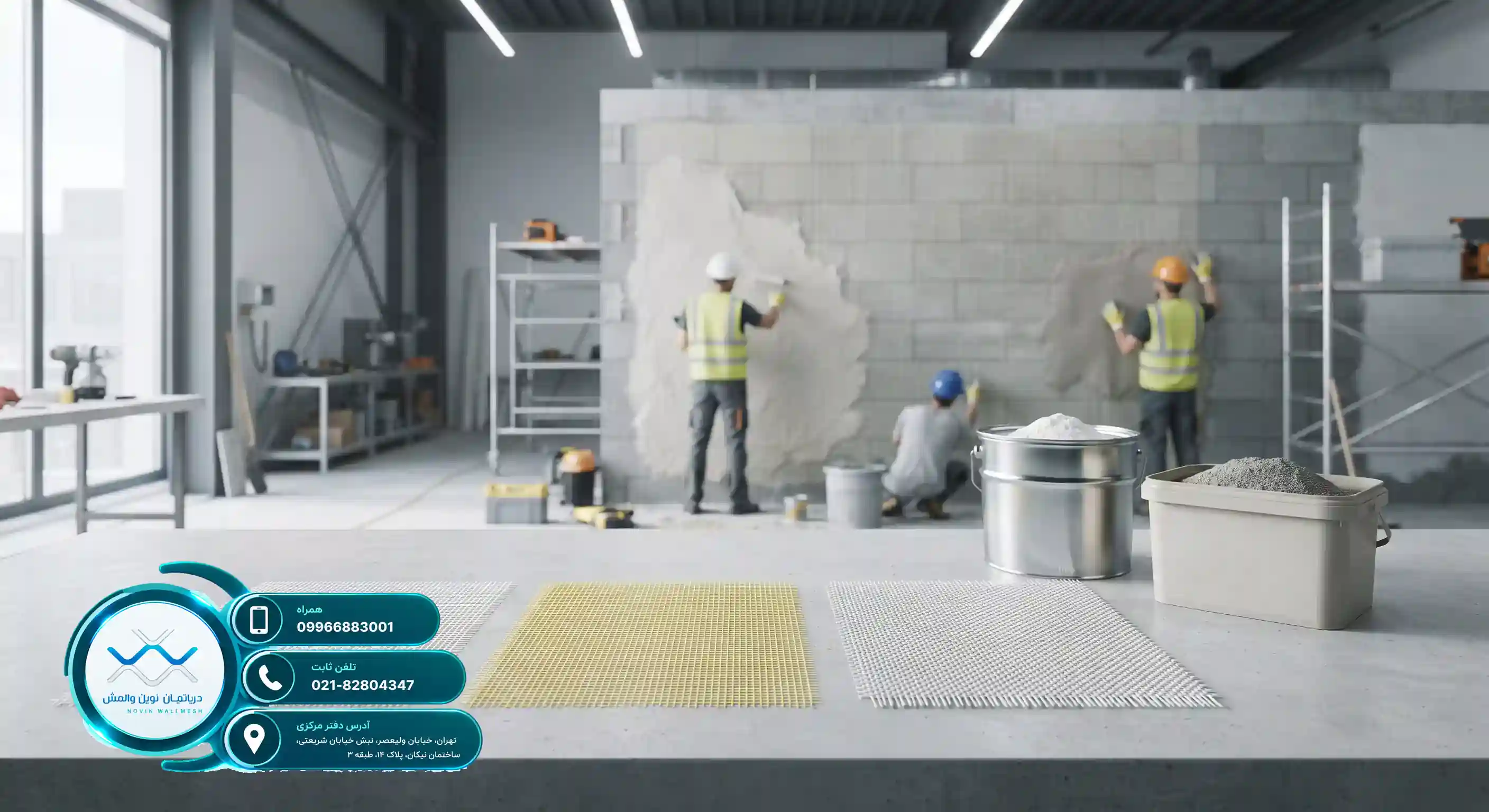
The Role of Modern Systems in Structural Safety
In the modern construction industry, safety against earthquakes and natural disasters is of paramount importance. Non-structural walls, serving as partition components, require precise reinforcement and retrofitting. Reviewing the wall mesh price helps engineers and contractors optimize their civil project budgeting. The use of standard equipment significantly increases building stability against lateral loads.
For renovation and restoration projects of older urban fabrics, studying the wall mesh buying guide for renovation projects can pave the way for more precise choices. Structural engineers always seek a balance between quality and operational costs to implement the highest level of safety at the lowest cost.
According to reports published in the specialized reference non-structural wall retrofitting with wall mesh, the use of engineered glass fibers has become a highly suitable alternative to traditional metal methods, reducing the dead weight of the building.
Why Cost Management Matters in Civil Engineering Projects
Controlling building material procurement costs is one of the primary concerns for project managers. Awareness of factors influencing market fluctuations helps wholesale buyers make their purchases at the best possible time. For more information on this subject, reading the article construction wall mesh price and market fluctuation factors is recommended.
- Increasing durability and lifespan of non-structural walls
- Significant reduction in execution costs compared to traditional wall posts
- Facilitating the execution process and reducing project timelines
Familiarity with Practical Products in the Modern Wall Mesh Department
For wholesale procurement of retrofitting materials, a precise understanding of the system's constituent components is very important. Fiberglass mesh, as the primary reinforcement element, is manufactured in various types, each having its own specific characteristics. The correct choice of product will have a direct impact on the final wall mesh price of the project.
The Modern Wall Mesh Department collection has been able to cover the diverse needs of supervising engineers and builders by providing high-quality products. The table below provides a brief comparison among various types of fiberglass meshes:
| Product Type | Main Feature | Wholesale Application |
|---|---|---|
| E-Glass Mesh | Standard tensile strength | Regular residential and commercial projects |
| C-Glass Mesh | High chemical resistance | Humid and corrosive environments |
| Zr-Glass Mesh | Excellent resistance to alkaline environments | Facades and heavy concrete surfaces |
In addition to fiberglass mesh, using suitable plaster plays a complementary role in the integrated performance of the wall. The cement-based plaster and gypsum plaster produced in this collection create extraordinary adhesion between the mesh and the wall substrate.
The Role of Plaster in the Wall Reinforcement System
Plasters act as force transfer matrices. The choice of plaster type (gypsum or cement) is determined based on the environmental conditions of the project and can influence the overall cost estimation.
Comprehensive Buying Guide for Wall Mesh in Large Residential and Commercial Projects
Comprehensive Buying Guide for Wall Mesh in Large Residential and Commercial Projects
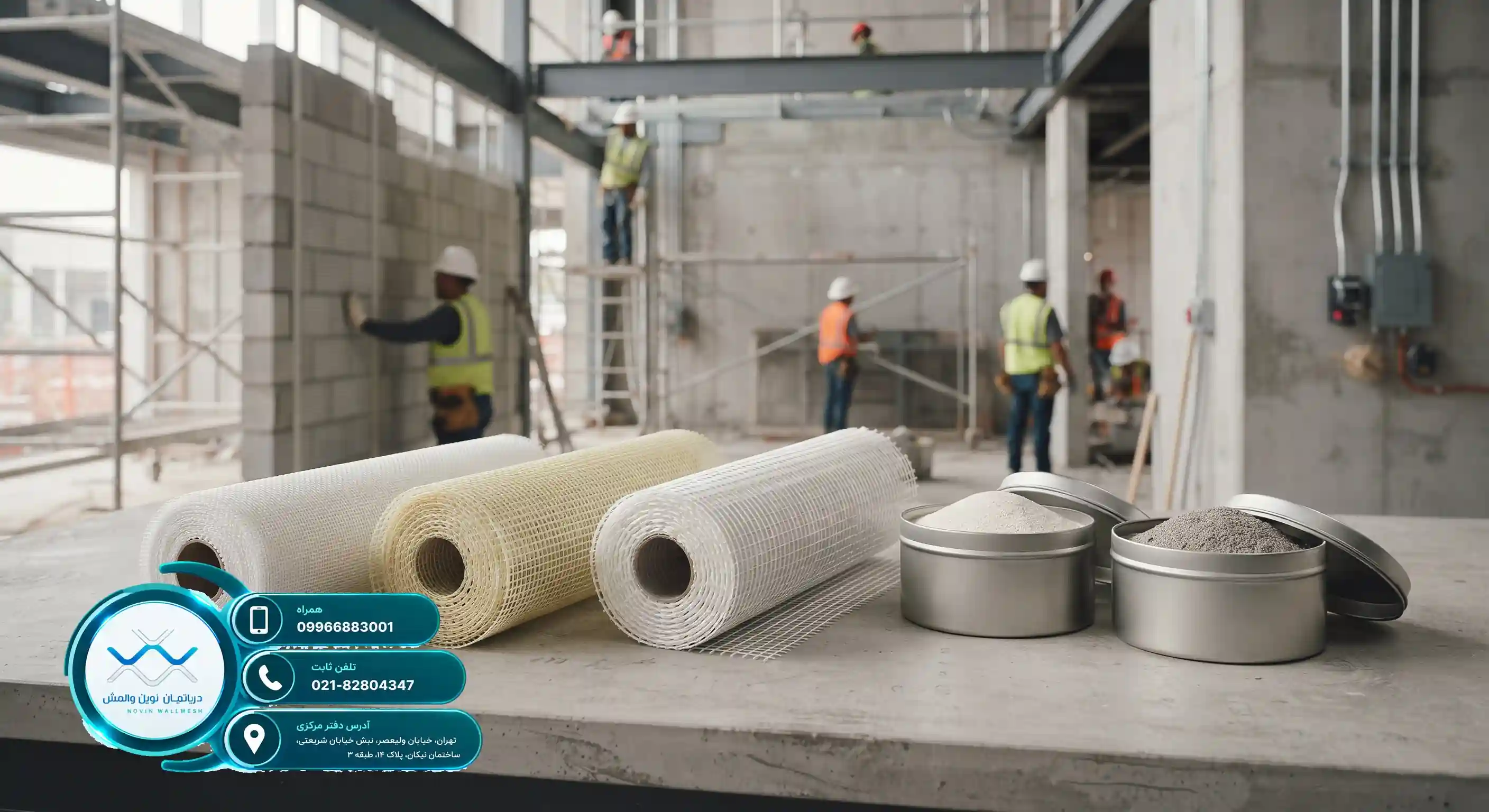
Introduction and Importance of Retrofitting Non-Structural Walls
In recent years, the country's construction industry has undergone fundamental changes. New seismic design codes, especially the Iranian Standard 2800, have paid special attention to the seismic restraint of non-structural walls (infill walls and partitions). Prior to the prevalence of modern systems, traditional angle-iron bracing (Nabshi-keshi) was common, which, in addition to imposing a high dead load on the structure, also entailed exorbitant costs. Today, the process of buying wall mesh as an advanced engineering solution has replaced traditional methods to optimally guarantee earthquake safety.
We at the Modern Wall Mesh Department have taken a major step toward upgrading construction standards by providing engineered products. Non-structural walls suffer severe damage during earthquakes and create numerous life and financial hazards. According to studies published in reputable international sources such as non-structural wall retrofitting with wall mesh, using distributed fiber reinforcement systems absorbs earthquake energy better and prevents sudden wall collapse.
Traditional Challenges in Restraining Non-Structural Walls
Traditional wall restraint methods were usually accompanied by high execution errors, weak welded connections, and point stresses. In contrast, the wall mesh system distributes the earthquake load homogeneously across the entire wall surface by creating surface integrity. Consulting engineers and structural designers can make the best decision for selecting the materials consumed by carefully studying the wall mesh buying guide for under-construction projects. Paying attention to the type of materials consumed, the quality of the mesh weave, and its tensile strength plays a key role in the ultimate seismic performance of the structure.
Accurate Identification of Fiberglass Mesh Types in the Market
To buy quality wall mesh, you must first become familiar with the various available products and the application of each. Fiberglass meshes are known as the main reinforcing core of plasters and are divided into different categories based on fiber type and coating. Incorrect mesh selection can call the entire retrofitting system into question and fail to provide optimal performance during an earthquake.
| Product Name | Fiber Type | Main Application | Competitive Advantage |
|---|---|---|---|
| E-Glass Mesh by Modern Wall Mesh Department | E-type glass | General residential projects | Cost-effective and standard quality |
| C-Glass Mesh by Modern Wall Mesh Department | C-type glass | Environments with high risk of corrosion | High chemical resistance |
| Zr-Glass Mesh by Modern Wall Mesh Department | Zirconia-resistant | Large commercial and industrial projects | Extraordinary durability in alkaline concrete and plaster environments |
The Role of Glass Fibers in the Long-Term Durability of the Wall
The alkaline environment of cement mortars can gradually destroy substandard fibers. For this reason, using alkali-resistant coated meshes (AR-Glass or Zr-Glass) is vital in large projects. Supervising engineers and esteemed employers can obtain complete information regarding the selection of grid size and appropriate weight by carefully reviewing the wall mesh buying guide for infill walls to guarantee structural stability against lateral loads.
Comprehensive Buying Guide for Wall Mesh in Retaining Walls
Comprehensive Buying Guide for Wall Mesh in Retaining Walls
The Importance of Reinforcing and Retrofitting Non-Structural Walls
In the modern construction industry, safety against earthquakes and lateral forces is of particular importance. Retaining walls and non-structural walls, as partition components, require efficient reinforcement systems so that they do not experience sudden collapse during natural disasters. The process of buying wall mesh, as one of the newest engineering solutions, has nowadays replaced traditional methods such as heavy metal wall-posts. This technology not only reduces the dead load of the structure, but also dramatically increases the flexibility and integrity of the wall.
We at the Novin Wall Mesh Department, by providing engineered products and world standards, help engineers and builders maximize the safety of their structures. Choosing the right materials in this field forms the foundation for the long-term durability of the building.
Structural Advantages of Modern Wall Mesh Systems
Using this technology brings countless advantages, among the most important of which are the following:
- Drastic reduction of structural dead load and foundation design optimization
- High execution speed compared to traditional metal wall-posts
- Exceptional resistance against corrosion and thermal stresses
- Integrated performance under seismic lateral loading
To become more familiar with global retrofitting standards, reading reliable resources such as retrofitting non-structural walls with wall mesh is suggested, which presents advanced engineering perspectives in this field.
The Vital Role of Fiberglass Mesh in Wall Reinforcement
Fiberglass mesh is the primary tensile component of the wall mesh system that distributes incoming forces across the wall surface. When buying wall mesh, understanding the types of fiberglass meshes is of high importance. Our products in the Novin Wall Mesh Department include various models, each designed for specific conditions.
The offered types of fiberglass mesh are:
- Novin Wall Mesh Department E-Glass Fiberglass Mesh: Suitable for general projects with standard technical specifications.
- Novin Wall Mesh Department C-Glass Fiberglass Mesh: Possesses favorable chemical resistance against environmental corrosive agents.
- Novin Wall Mesh Department Zr-Glass Fiberglass Mesh: Contains zirconia, resistant to alkaline concrete and plaster environments.
Choosing the correct mesh type has a direct relationship with the type of mortar used. For more specialized information in this regard, you can read the article Guide to Choosing and Buying Novin Wall Mesh Department Fiberglass Mesh for Cement Mortar to select the best option for your project.
| Fiberglass Mesh Type | Main Characteristic | Suggested Application |
|---|---|---|
| E-Glass | High tensile strength | Interior and ordinary walls |
| C-Glass | Appropriate chemical resistance | Humid environments |
| Zr-Glass | Excellent alkali resistance (Anti-Alkalis) | Exterior facades and heavy cement mortars |