Complete Guide to Implementing the Wall Reinforcement Method with Fiberglass Mesh and Plaster
Complete Guide to Implementing the Wall Reinforcement Method with Fiberglass Mesh and Plaster
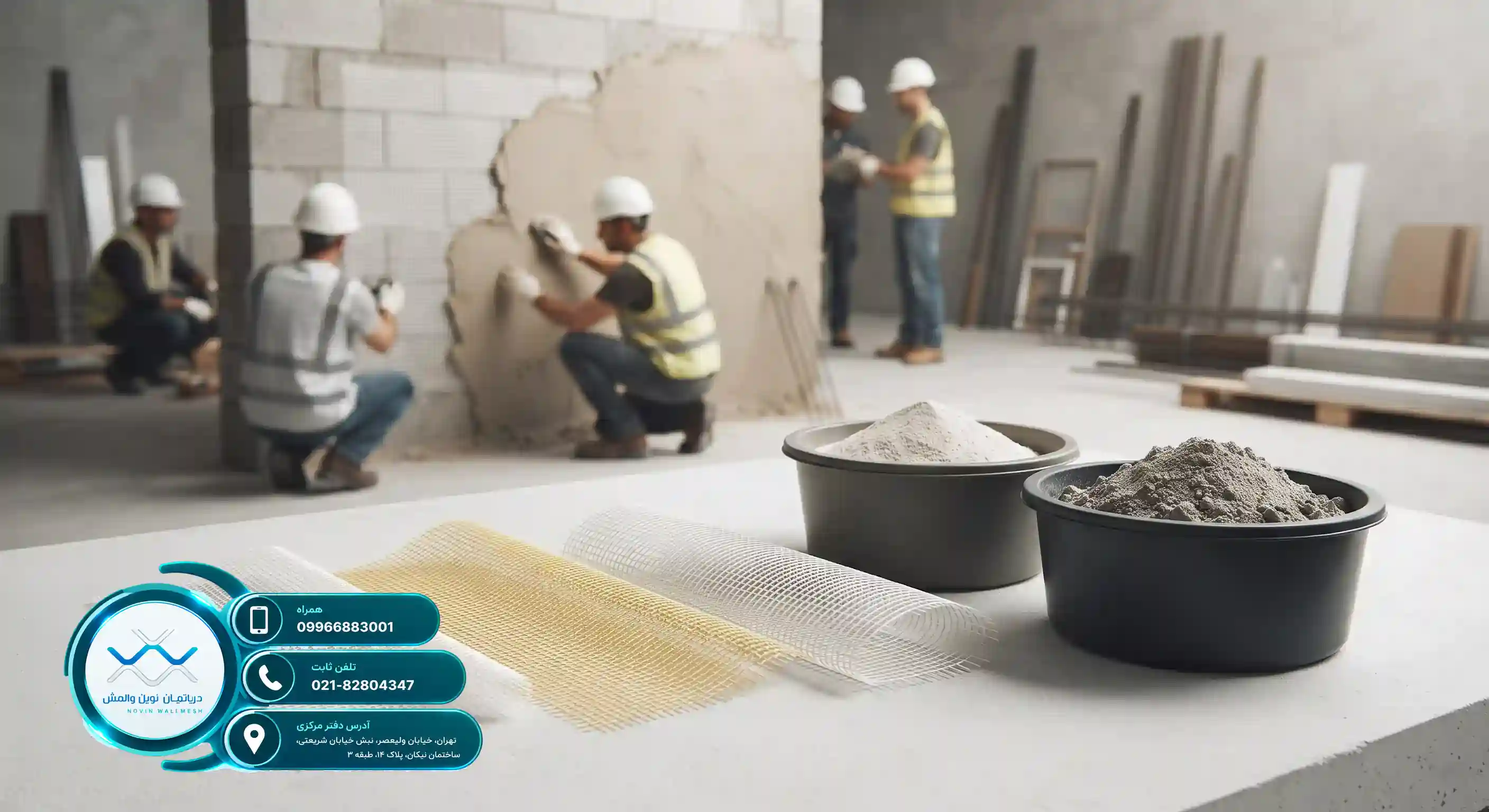
Understanding the Importance of Retrofitting Non-Structural Walls
In modern structural engineering, the safety of infill walls and perimeter walls is of paramount importance. Recent earthquakes have shown that the vulnerability of non-structural walls can create extensive life and financial hazards. Therefore, utilizing modern technologies such as Tarsازه for controlling lateral damages is mandatory. The wall reinforcement method using fiberglass mesh and plaster is recognized as one of the most efficient wall-mesh methods, serving as a suitable alternative to traditional metal wall-posts.
This modern system, by creating integrity in the wall structure, distributes earthquake forces homogeneously. Based on research conducted in the field of earthquake engineering, the use of fibrous meshes can largely prevent the sudden collapse of walls (Wall reinforcement with fiberglass mesh). For a better understanding of these concepts, a careful study of executive standards is recommended.
Structural Advantages of the Wall-Mesh System
Traditional systems had high weight and large execution costs. However, in the wall reinforcement technology with composite materials, the dead load of the structure is drastically reduced. As an example, for a more detailed examination of these behaviors, you can refer to the article Comparison of Seismic Performance of Wall Reinforcement Method with Fiberglass Mesh and Plaster to reveal the structural differences.
The Key Role of Fiberglass Mesh Types in Retrofitting
Selecting the appropriate type of mesh is the cornerstone of success in implementing the wall reinforcement method with fiberglass mesh and plaster. Various products exist in the market, each designed for specific environmental conditions. Recognizing the differences between mesh types will guarantee the long-term durability and stability of your construction project.
- E-Glass Mesh: Suitable for indoor environments with normal conditions.
- C-Glass Mesh: Possesses high chemical resistance against specific compounds.
- Zr-Glass Mesh: Contains zirconia, resistant to alkaline and gypsum environments (Wall reinforcement with fiberglass mesh).
The variety in these engineered materials allows engineers to make the best decision based on their project type. The use of standard meshes improves the adhesion of layers to the wall surface.