Comprehensive Guide to Executing Wall Mesh Plaster on E-Glass Fiberglass Mesh
Comprehensive Guide to Executing Wall Mesh Plaster on E-Glass Fiberglass Mesh
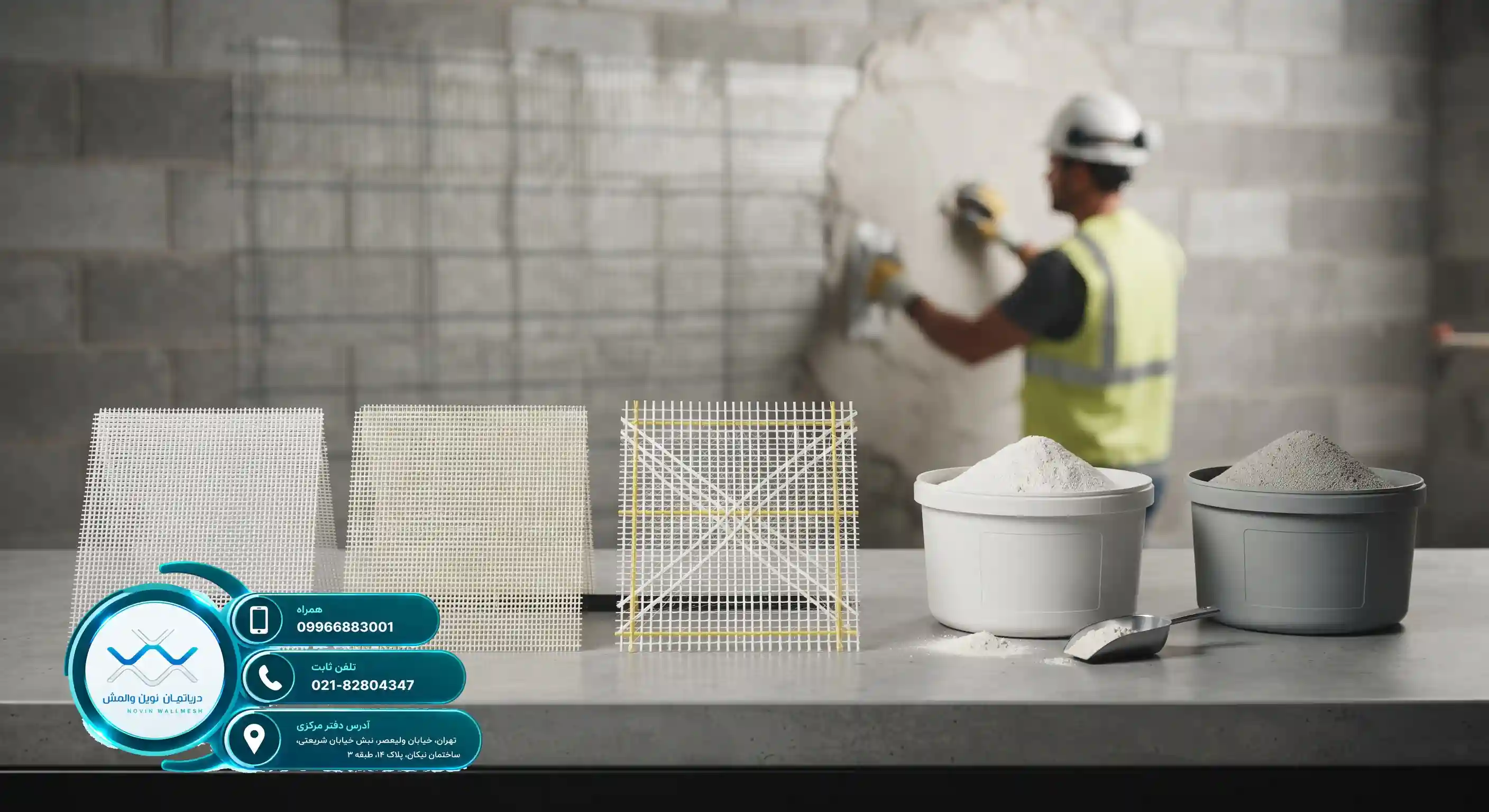
Introduction to Modern Wall Mesh Technology and Its Plaster
In recent years, Iran's construction industry has witnessed dramatic developments in the seismic retrofitting of non-structural walls. The traditional use of heavy and costly steel wall posts has given way to modern, engineered systems such as wall mesh. Among these, the role of wall mesh plaster as a continuous and integrating layer is of vital importance. This system not only drastically reduces the dead load of the building but also demonstrates homogeneous performance against lateral earthquake forces.
At Novin Wall Mesh Department, with years of specialized experience, we provide the most optimal engineering solutions for reinforcing perimeter and internal walls. Proper execution of plaster over the fiber grid guarantees the long-term durability and stability of the wall. To better understand this subject, reading the specialized article The Role of E-Glass Fiberglass Mesh in Wall Mesh Calculations is recommended, as it accurately examines the engineering dimensions of this technology.
The purpose of this comprehensive guide is to provide step-by-step and standard execution details regarding the plastering process on glass fiber networks so that supervising engineers, qualified contractors, and esteemed employers can implement the highest level of quality in their civil projects.
The Key Role of Glass Fibers in Wall Reinforcement
Fiberglass meshes are divided into various categories such as E-Glass, C-Glass, and Zr-Glass based on their chemical composition type. Among these, E-Glass fiberglass mesh, due to its very high tensile strength, favorable modulus of elasticity, and adequate stability in mildly alkaline environments, is recognized as one of the most widely used materials in the execution of wall mesh plaster. These fibers are responsible for distributing stresses caused by thermal deformations and earthquakes.
According to international building material standards, the use of high-quality fibers has a direct impact on the final performance of the structure. For further reading regarding global standards for the production and application of these products, you can refer to the reference article Tarsaze E-Glass Fiberglass Mesh, which provides precise technical specifications. Additionally, resistance to mildly alkaline environments significantly increases the useful life of the network.
When selecting the appropriate mesh, paying attention to the mesh aperture dimensions and weight per unit area (grammage) is of high importance. Standard apertures usually have dimensions between 5 by 5 centimeters, which allows the plaster to properly penetrate the wall substrate and create a strong mechanical bond.